Sunday, November 4, 2012

TCRWP October 27th Saturday Reunion

I awoke to catch the 4:45am Friday train to NYC so I could be part of a school visit to PS41 in Greenwich Village starting at 9am. I arrived in time and spent the day observing grades K-5 doing reading and writing workshop. Here are some of the clear and purposeful anchor charts I saw hung at PS41:

In 1st grade:


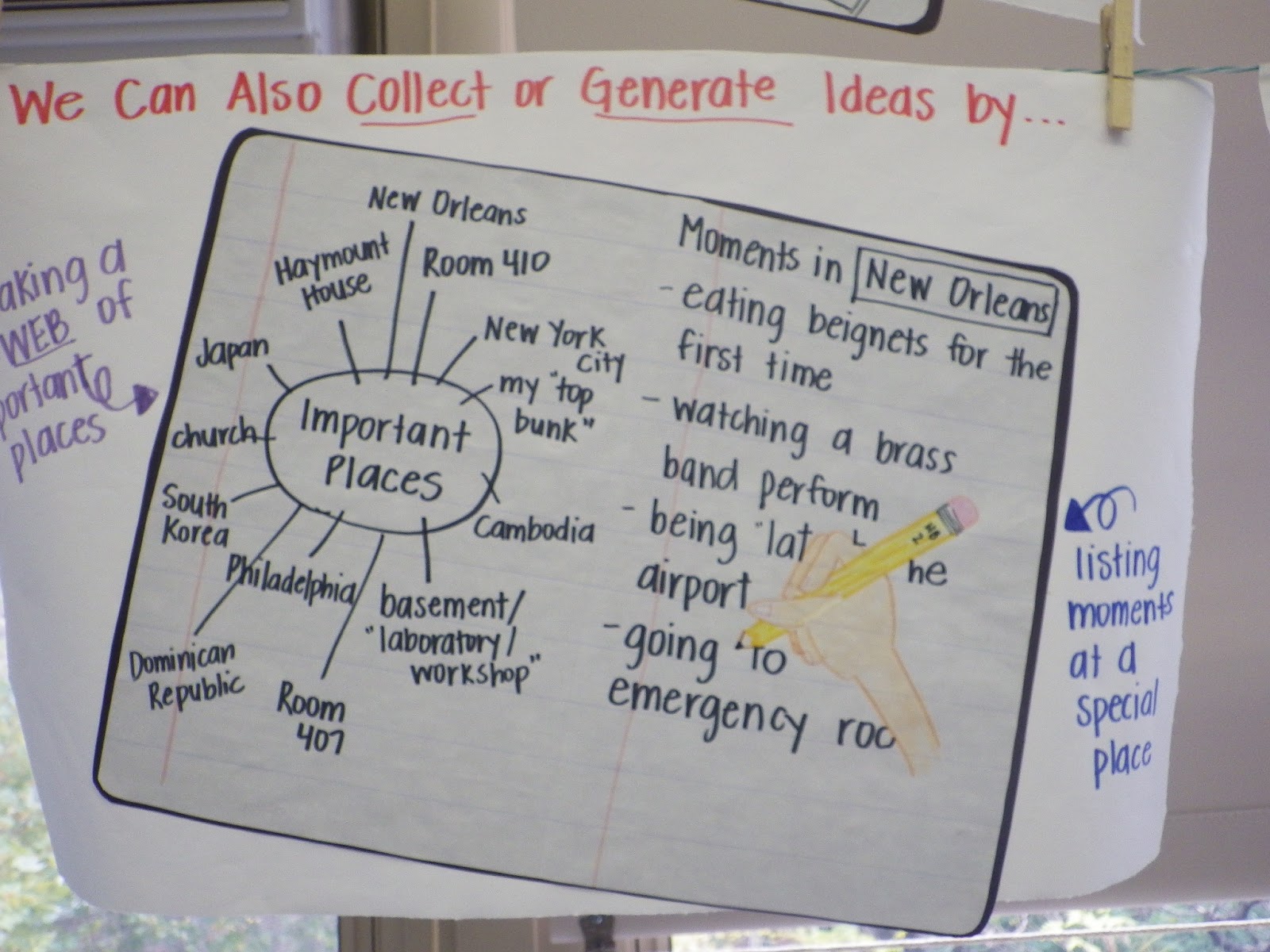
Writing: Generating Ideas Charts in a 3rd grade classroom:


Writing Realistic Fiction Anchor charts in a 4th grade classroom:


 Jotting in a 2nd grade classroom:

 THEN SATURDAY....TCRWP SATURDAY REUNION!!!!!

When Students read book we don’t know   by Alex Marron

Teachers can’t read everything our kids are reading. Instead of trying to, try to do this:
1.Read the first book in several popular series.
2.Read a variety of genres so you are familiar with HOW that genre goes and see if kids understand the way the genre goes when you conference with them.
3.Go to your strongest readers and ask them for recommendations. They know!
4.Get kids excited about the series YOU are reading by buzzing about these books. Then they will be reading books you know!
5.KNOW how books go at each level. Then see if they are doing the kind of thinking required at this level.
KNOW How Books GO at each level:
KLM books have:
General, predictable characters
Character that always wants something and in the end they get something
but it might be different than what they first wanted (EX: In Those Shoes, Jeremy wants shoes but gets a friend)
Multi-syllabic words (are they being problem-solvers of tricky words?)
More domain specific words (can they understand these words in context?)
Character will not change but their FEELINGS will.
We can help these readers to  identify the feeling of the character, track his feeling across the book, and state how the feeling changes

NOPQ books have:
Characters that change and learn a lesson
We can help them track character in beg, note changes by the end
Multiple plot lines
Are students aware of this? Also pay attention to what is happening both internally and externally
Lots of figurative language
Do they “get it”? Teach them how to attack understanding of idioms using the context
EX: Ramona, Amber Brown

RST books have:
Setting becomes important and is like a character
Especially in HF and Fantasy. Do they have a sense of place? Are they reading the long descriptions and visualizing?
Character Traits are not explicitly stated
Characters are more than one way
Push them by asking “And what else? Are they different in different situations?
Underlying plot lines
The plot may start somewhere in the storyline (not always at the very beginning) and the reader needs to suspend comprehension, hold onto what is happening and ask LOTS of questions. Soon it will all make sense.
EX: Great Gilly Hopkins
UVW books have:
Characters are VERY complex and nuanced
It may not be until the very end that we understand the character because the book is more of a journey; The character has multiple traits and internal factors also influence who they are externally
Big shifts occur in time
flashbacks / flashforwards / structure may be diff perspectives told by chapter
Symbolism
Something stands for more. What does it really stand for? Are their things repeated?
Themes
What is it really about?
Variety of Language structures
 
Knowing characteristics of bands of books can help us anticipate the hurdles are students may have. We can teach into the skills they need to read and understand the books they are reading.
General questions to ask when you don’t know the book:
1.What seems important so far?
2.What themes, issues, lessons are you noticing?
3.What have you learned about the character so far? Show me a part in the book that told you that.
NOTE: if they seem to only retell, you know they are reading for plot. So teach into the other strategies (character traits, setting, themes, symbolism


Great New Books – Suggested by Rob Ross
 
Two great historical fiction books set in the time of the Civil Rights Movement.
BOOKS BY JEREMY TANKARD:

NONFICTION BOOKS by Nicola Davies, Molly, Bang and Gail Gibbons:

Lucy shared highlights of the NEW Units for teaching Writing that can be purchased through Heinemann come April. The Unit sets are GRADE SPECIFIC.
NEXT Reunion Saturday - March 9th and Katherine Paterson will be the Keynote Speaker!

Example of how WRITING can change the world!

Read about how "Dante Cano, a fifth-grader from New Jersey, thought the yellow flags that referees throw when there’s a penalty should also be pink, so we he wrote a letter to NFL Commissioner Roger Goodell."

http://www.washingtonpost.com/lifestyle/kidspost/boys-idea-scores-with-the-nfl/2012/10/30/33add3fe-21c9-11e2-ac85-e669876c6a24_story.html

And his idea in writing was accepted. During the Oct. 28th football game between the Jets and Dolphins, in honor of Breast Cancer Awareness Month, the refs threw PINK FLAGS to indicate a pentalty had occurred.

Share this story with students as an example that writing CAN change the world!!

Thursday, October 11, 2012

Poem I shared as a birthday bookmark!

I copied the poem below from this book:

and printed it onto cardstock
and shared with staff and students
on my birthday today 10/11/12!!

This Book
By Avis Harley

This book is the best –
I woke up to read it
Before getting dressed.

This book is so cool –
It’s the first thing I grabbed
When I rushed in from     
    school.

This book is a winner –
I forgot I was hungry.
I almost missed dinner.

This book is just right –
I’m reading by flashlight
    deep into the night
Deliciously thirsty to see how
    it ends.

Books are such mind-thrilling
Spine-tingling friends.

Tuesday, October 9, 2012

Be inspired by children's authors: eight 3-min videos

http://www.nbclearn.com/writersspeak

This link will take you to Write's Speak for kids, sponsored by NBClearn.

I especialy liked Mo Willem and Jacqueline Woodson interviews!

Saturday, September 22, 2012

2012 National Book Festival Highlights


It was a beautiful weekend to enjoy the breeze under the big white tents as authors shared over two days at the 12th Annual National Book Festival on the downtown Mall in Washington, D.C. A favorite of the festival was Sandra Cisneros. Thanks to TCRWP, I am quite a fan of her short story, Eleven. So when it was question time, I asked her what inspired her to write it. She admitted that a similar incident occurred when she was 9 years old. Yet, it took her 30 years later to write it down and she did so in one weekend.
"We need to write what we cannot speak. We need to write about what we wish we could forget. We write to heal us."

When a child asked her if she still feels like the character in Eleven, she admitted that "most of the time I am the happy 11 year old. But now I am 58. So I sometimes feel 58, 57, 56... and sometimes I am frightened and can't speak up and feel 11 again. I am a shy person. I try to practice not being afraid." When ask if she'll run out of things to write about, she said never. "In one hour, you feel so much...so in a day...a week....so much to write about!!"
Have You Seen Marie?

She treated us to her NEW story - Have You Seen Maria? WOW! It was SOOOO rich with descriptions, I felt as if I was right there as the characters searched the neighborhood for the lost cat and also right there feeling the loss of her mother. "I felt like a lost glove, left behind at the train station." And that is just one of many, many, many descriptions. "Stories are like medicine. They come to us when we need them. This newest book will be the perfect gift for anyone experiencing grief.
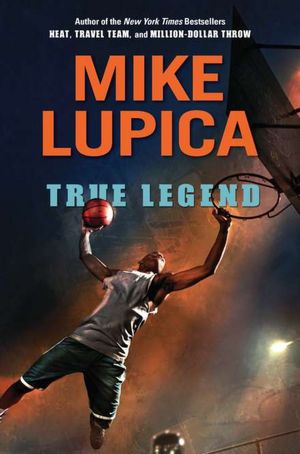
I loved hearing how Mike Lupica became a young adult writer. When his son got cut for the first time from the travel basketball team in 7th grade, he decided to sponsor his own travel team, made up of all the rejected players. Once the successful season ended, he thought it could be a story, so he pitched it to his sports editor. And the product of this is his first young adult sports books, Travel Team. Now his 16th book is out - True Legend. All his books have the themes of friendship, teamwork, and loyalty.
His books are about different sports but the story lines are all about being a good friend and the experience of trying to do something great. The main character is knocked down (no talent is needed for this to happen) and then the story focuses on how the character gets back up. "I write about regular kids trying to be great."


He stated, "Everything I write about in these books comes from my life as a parent with kids who play sports. My own kids will tell me if I have the dialogue right."

"I got the idea for Heat in 1994. There was a baseball strike and the World Series was cancelled that season. I decided to go to the last game of the regular season and as I arrived at Yankee Statium, I noticed a group of kids playing soccer in the park next to the statium. I asked the person in charge if the kids would like to come to the game and I ended up treating 30 of them to the game. During the game, I asked how many of them had ever come to a game before and only 3 had. These kids live in the neighborhood around the statium, yet had never been inside to watch a game. That idea stuck with me and became the storyline of the book, Heat.

Mike Lupica is the kind of writer that writes the fiction story the way he wants it to turn out. The underdog sports player wins in the end! I want to use his books while teaching fiction writing. We write about what we know and we can also write the story of how we wish life really was!
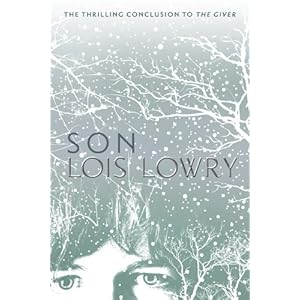
LOIS LOWRY is an ALL-TIME FAVORITE OF MINE!!! She wrote The Giver and then received so much mail asking "What happened to Jonas?" While writing Gathering Blue, she decided to add Jonas so readers would know he was alright. Then she decided to make it a trilogy and wrote Messenger. But then she kept getting mail, asking What happened to Gabe? So she wrote Son and it is coming out in October!

Now it is a quartet! Son is the story of Claire, the birthmother of Gabe. Then it is the story of Gabe asking Jonas who is mother is. Then it is also the story of Gabe searching for his birth mother.She said when writing the character, Claire, she was reminded of a story in the news in 1975 that took place near where she lived in Maine. A family was camping and their son wandered off and a search began and after days, he was never found. As a mother, she couldn't imagine just leaving, going home, without the son. How can a mother just leave and not know. This is how her character, Claire feels. What will she sacrifice to find her son? I can't wait to read Son!!
Jerry Spinelli shared that he wanted to publish a book but kept getting rejection letters. So he would write another book and finally after having 4 books rejected, his 5th was accepted. Now he has written 35 novels for children to read. If he ran a school today, he said, he would ensure that there was a course called "Failure is My Friend"! His failures were like stepping stones. He reminded the audience that we cross the creek on the stepping stones of our failures. We need to NOT be afraid to fail.

When asked what inspired him to write Maniac Magee, he said he loved the song by Martha and the Vandels, Dancing in the Street. He loved the image of everybody getting together and dancing together in the street. And this idea, led to writing Maniac Magee.
Walter Dean Myers is the National Ambassador of Young Children's Literature for the Library of Congress. He has written 105 books and at age 75, wakes every day and writes 5 pages. He said that in his books he tries to humanize the characters so the world can see more than just a poor, troubled, black person. As Ambassador, he is working to show: 1) illiteracy is growing in the USA and it is growing in proportion to the prison population; 2) Books can't just be thought of any more as a pleasure. Books are ESSENTIAL; 3) Parents need to know that they should talk about books with their child.


Brian Collier is a passionate, inspiring author and illustrator!!

At age 4, his favorite books were A Snowy Day and Harold and the Purple Crayon. I looked like Peter and taking his hat off, I even looked like Harold!

Remembering how important it was for him to see himself in books, he makes books so kids can also see themselves in books. This is the case with his book, Uptown. He wrote about what he knows, his Harlem neighborhood in this beautiful book with collage illustrations.
 
He also shared the background of Dave, the Potter. It is a book about a slave named Dave who lived 200 years ago. It is also a book about how Dave, because he learned (illegially) to read, he could dream of another world, making the book a strong story about the importance of literacy.

He realizes now that his grandmother gave him a silent gift - she made quilts, which are a lot like the collages he makes. She planted a seed. He reminded us to pay attention to the silent gifts - the things our family focuses on - as these are a part of us. What seed am I planting? What seed has been planted for me?

Patricia Polacco was the biggest ADVOCATE for teachers at the Book Festival. She struggled learning to read and finally at age 14, her teacher, Mr. Falker, helped her. Before she thought school was torture and that she was dumb. FInally, he got her help to deal with her dyslexia and read and get it. She celebrates her teachers in these books:


She said, "I thank the Lord everyday that I walk the earth with the most heroic of all species, TEACHERS!

Saturday, August 11, 2012

TCRWP August Reading Institute Highlights

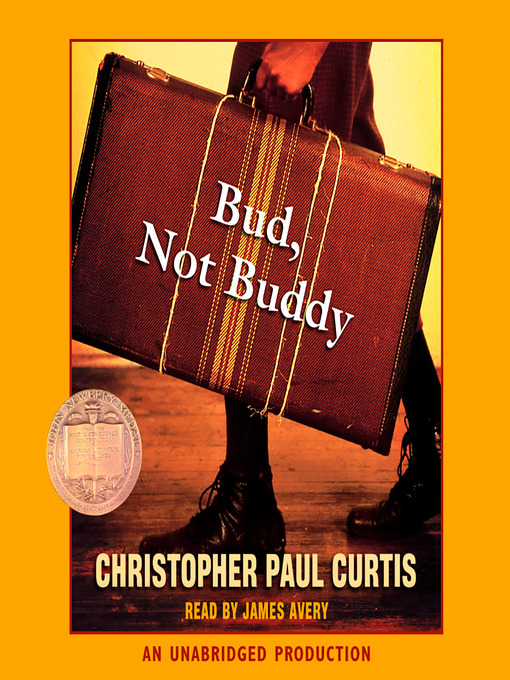
             I spent a week learning with Maggie at TCRWP about how to read more deeply Historical Fiction with Nonfiction or how to use TEXT SETS (multiple books with one thing in common). I read Bud, Not Buddy while these other 3 titles were read by my collegues. We all were given an nonfiction book called The Great Depression. Thus, the common theme among these texts is the setting - the 1930s.


Maggie modeled how to help readers read deeper using this book:
As I listened to this story, set in 1952, I was motivated to read nonfiction related to the Green Book that Ruth's family uses as they travel from Chicago to the South to visit their grandma. I experienced the power that a historical fiction book can have to build my curiousity about a time period. I found myself googling Esso and The Green Book.

Then after I read the first 3 chapters of Bud, Not Buddy, I did the same. I opened the book given me entitled The Great Depression which honestly had NO appeal when I saw it on day one.

As a teacher, I will remember this experience. I will  help connect kids with books of all genres around a similar topic. I will especially model using nonfiction to understand historical fiction. What a great way to build reading volume and deeper understanding of a topic!

I also spent a week learning with Shana about how to use performance assessments to drive our instruction in Reading Workshop. She modeled and had us experience jotting our thinking while she read-aloud this book:


Then she suggested we think in terms of SKILL PROGRESSION.
Looking at my post-it, I named a main character, Hare, and named how the Hare felt.
A conference might sound like this:

Remember when you were the kind of reader who kept track of the plot and jotted that down?
(Name the logical skill that came before what you notice now)
Now I see you are the kind of readers who is also noticing the characters carefully and are able to name how they are feeling. (Name what reader is currently doing.)
(Now name the logical and significant next step to keep the reader growing as a reader.)
It seems that you may be ready to also try some more character work. As you continue to read, continue to
notice the characters and think about how they MOSTLY feel. See if you notice a pattern.
Assessing students informally using post-its and then conferencing by naming what they used to do and what
they are doing now, a teacher can help a reader to read more deeply.

I luckily got to hear children's author SEYMORE SIMON as a keynote speaker. What an inspiration!!

Check out his AWESOME WEBSITE!!  http://www.seymoursimon.com/ 
He turned 81 on Thursday, August 9th. He grew up in the Bronx and taught science for 25 years, always interested in bugs, plants, lightning, and planets – all things found in the city!
His 1st  book is Science in the Vacant Lot. Now he has published over 250 books!
His favorite book – The Paper Airplane Book – inspired this cool video - check it out!!

He now is offering his books as ebooks through StarWalk Kids Media. You can read about this on his website.

He also has a post each Wed – Writing Wednesdays and students can write in to respond to his post. I plan to share this idea with students and teachers. He also has Teachers Guides available for each book!  What a treasure Seymore Simon is! I loved hearing him speak in person!!