Monday, April 22, 2013

Favorite Author, E. L. Konigsburg, dies :(

Sad news reported today...
http://www.huffingtonpost.com/2013/04/21/el-konigsburg-dead-dies-_n_3129444.html

My very favorite author, E.L. Konigsburg died on April 21, 2013 at the age of 83.
She is best known for winning the 1968 Newbery Award for:

and the same year won a Newbery Honor Award for:

I clearly remember in 1972, my 4th grade teacher reading aloud From The Mixed-Up Files of Mrs. Basil E. Frankweiler to our class. Then, on my own, I checked out from the public library ALL of her books. By 1972, there was a shelf-full. She is the first author that I read and read and read everything she wrote. She is the first author I called "my favorite".

She then kept writing and in 1997, she won the Newbery again for writing A View From Saturday.

I vow to reread and enjoy ALL of her books this summer...
Here they all are, as listed on her Wikopedia page:
And as a teacher, I will ALWAYS introduce my students to her books.
We are lucky...though she is gone from this earth, her books, her stories, remain!

Thursday, April 4, 2013

Author, Valerie Tripp, historical fiction writer of American Girl books!

I enjoyed an hour at Cherrydale Library in Arlington, VA listening to the historical fiction author of many of the American Girl books, Valeria Tripp. Thanks to her, we have the memorable characters of Felicity (9 yrs old in 1774), Josephine (pronounced hos-e-fin-a and 9 yrs old in the now New Mexico area in 1824), Samantha (9 yrs old at the turn of the 19th century), Kit (9 yrs old during the Great Depression), and Molly (9 yrs old in 1944, during WWII). Personally, I always liked Molly most because my own mother was also 9 yrs old in 1944!!!! Now another favorite is Julie who is 9 yrs old in 1972 (I was 9 in 1972!!!).
Thanks to Nana, my girls own Samantha (Bridgit) and Joesphina (Anne). About 15 years ago, we read-aloud all 6 books in each series....Felicity, Molly, Addy, Josephina, Samantha, Kit and Molly. On my own, two summers ago, I discovered the new Julie series. Valerie today said she was working on a NEW SERIES to be published in 2015 but she would NOT share a name or a time period. But I will remember to be looking for it in two short years!

Ms. Valerie Tripp shared that to write these books, she first thought about girls in the present time and what they spend their time doing. For example, the girls in the audience today spent the day at school. Then she thought about what girls were doing to learn in Williamsburg in the 1770s. Through research, she found out that girls didn't get to go to school. They learned at home with a tutor.

When she wrote the Samantha series, she would read the drafts to her husband. Because she wanted Samantha to go live in New York City with Uncle Garth, she decided to kill off Grand Mary. When her husband read the draft, he thought this was horrible and cold-hearted. So she revised and had Grand Mary remarry and take a sailing trip, requiring Samantha to go live in New York City. Now, both her husband and her were happy!

When Ms. Valeria Tripp was 9 years old, her friends and her dressed up in Hawaiian outfits and mean Stevie Brown sprayed them with a hose, getting their handmade costume all wet and spilling their Halloween candy on the ground. Boy was she mad. 24 years later, she used that story from HER life and made it Molly's story. She told the crowd today to PAY ATTENTION to all the stories occurring in your life. With your imagination and memory of stories from your life, YOU can write your own stories!!!

She shared that she did not start out as a great writer. She showed us writing she did in first grade and the spelling was horrible. She asked if, when playing soccer, would we quit because she sweated, were out of breathe, and got dirty?? Of course not! The same must be remembered with writing. At first, we may struggle. But we can't let that stop us. We have stories to tell.

She suggested that we be CURIOUS...talk to the oldest relative; talk to the neighbor from another country. Then, with their stories and our own imagination, a new story can be written!!

During the question/answer period, a boy asked what to do when you can't get your good idea written down on paper. She suggested orally practicing what you what to write. Say it into a tape recorder, even. Then, after the oral practice, it will be easier to be written down.

Ms. Valeria Tripp ended by THANKING the crowd. "It is YOU who inspire the stories. As a reader, YOU make the squiggles on the page matter. Thank you for reading and doing that."

To learn more, go to: http://www.americangirl.com/index.php

Sunday, March 24, 2013

March 22 - Author Candice Fleming visits my school!

What a treat my last day at school before beginning Spring Break was!!
Author Candice Fleming visited.
You can learned lots about her and her 30 books at:  http://www.candacefleming.com/

First she greeted our Kindergarteners and read them two awesome picture books. I loved hearing a student voice say, "That's a pattern book!" It made me think that we have taught them well during Writing Workshop.
Seven Hungry Babies and Oh, No!
When my next friend has a baby, Seven Hungry Babies is going to be my new Baby Shower book...so cute!

Then with the 1st and 2nd graders, she told them she is a writer just like they are and uses the same tools. She got the kids to name off some tools -  pencil, black marker,brain, paper. Then she told them that her two most important writing tools are HER EYES AND EARS! "I pay attention to everything around me. I have my eyes and ears wide open, looking for stories". She told how she got the story idea for Oh, No! while on vacation in Asia. While traveling, she met many "friends" - animals in the jungle. And then these became the characters in the story.

She pointed out that she just writes the words. Another person, an illustrator, makes the pictures. She shared some of the illustrator's sketches made with just a pencil and pointed out that they also used the eraser often. Just like a writer drafts a story and revises, so does an illustrator!

Sh shared how another story idea was inspired right in her backyard! She was planting a garden but bunnies kept getting into the garden. She added a cute fence, but that didn't keep them out. She added a really big fence, but that didn't work either. She used all these ideas from her life when she drafted the story that eventually became known as Muncha! Muncha! Muncha!
 and then she made a sequel, Tippy-Tippy-Tippy, Hide!
and then she shared with us that a third is coming out soon - the bunnies go to the BEACH!!!

When it was the 3rd and 4th graders turn, the told them that she used her EARS and EYES one day while taking her son to the beach. They saw seagulls, a birthday cake and strawberries on top. Later when she started to write a story with these 3 random objects, her niece suggested that it also have a princess in it and her son suggested that it have a big hair Troll in it. Now she had many random ideas. She used her imagination with all the things she saw and heard with her EYES and EARS and created Clever Jake Takes a Cake - truly, a very clever imaginative book! And I find it more fun now knowing that her inspiration for the story came from that day at the beach!
Clever Jack Takes the Cake 
She also shared how her mother told her the story of how when her mother was a girl, WWII was going on. Her mother recalled sending a box with soap, socks, and a Hershey bar to Europe to show she cared about the kids who were suffering due to the war. She got a thank you note back from Katje...which inspired Boxes for Katje.

She told the students that she began writing when she was their age in school and she shared her 4th grade school picture and her writing folder from that time. She proudly showed us the blue ribbon (now faded to purple) that she won when her teacher sent one of her stories in for a contest.

The last hour of the school day, Candice Fleming spent with the 5th and 6th graders. With them, she shared her work as a researcher and a biography writer.
Biographies

Candice had the students fascinated with history by showing them many Primary Source documents...Amelia Earhart's report card, a birthday invite written by Mary Lincoln for Willie's birthday party, Amelia's marriage certificate, a telegram from the President to Amelia, and a tracing of Abraham Lincoln's feet so he could have shoes made. These PRIMARY SOURCES helped her historical figures come to life for the students! She encouraged them, when doing research, to ask lots of questions and then search for primary source information. One great place to start is The Library of Congress website: www.loc.gov.

While Candice was at our school, her husband was visiting another FCPS. He is an illustrator!!
Be sure to check him out, too, at: http://www.ericrohmann.com/.
What a gifted family! What a great FRIDAY!!


Sunday, March 10, 2013

March 9th - TCRWP Reunion Saturday

During five, non-stop hours (should have been six but my head was spinning after five and I couldn't get a seat in the Riverside church, so I missed Lucy's Perfect Storm keynote), I learned SO much from the amazing educators associated with TCRWP!

1. The first hour was author, Katherine Paterson!! I especially enjoyed her explanation of how she came to write Bread and Roses, Too, her latest book. She saw an old photo of children who came to her town of Barre, VT in the 1918 to be educated when the Lawrence textile strike occurred and was inspired to write a historical fiction book based on this event. She read-aloud a portion of the book to us. I just purchased this book on my kindle fire so I listened attentively. Then she shared a fan letter from a soldier in Afghanistan who had just read Bridge to Teribithia. He thanked her for showing him how a book about beauty helped save his life. She connected with this soldier on his return from duty and encouraged him to write.I just downloaded his book, Words in the Dust, to my kindle fire!
  Words in the Dust

2.Currently, I am co-teaching a FCPS Writing Academy course (Teaching Multiple Genres during Writing Workshop) and we're using Carl Anderson's book how's it doing?. Teaching the course and then spending one hour with Carl yesterday have renewed my love for this man - what an amazing gift his conferring ideas are to the writing workshop process. Carl reminded me that the MOST important topic to teach kids is that writing communicates meaning. The structure of the piece, the details, the voice, and the conventions all are ways to get the meaning across. We must expect that a writer has something to say. He suggested having kids answer this question: Why is this event from my life important to me? What do I think about this topic? What is my opinion about this topic? We MUST focus on MEANING.

3. I ended up in the Milbank Chapel to hear Mary Ehernworth for my third hour due to my first choice workshop on the 4th floor being full (yes, I felt that burn in my legs from climbing four TC flights of stairs to only be turned away). Mary explained the importance of teaching kids how to write research-based argument essays. Then she shared her successes and struggles as she did this work with students. "Writers, when in your life have you won an argument or wished you could? In my job, the ability to stake my claim, without crying, is so beneficial. When you argue with logic, and not with emotions, you will be heard."
She shared great mentor texts (both print and visual) that can be used when teaching this writing unit. The mentor texts can be found on the TC website at this link: http://readingandwritingproject.com/resources/assessments/performance-assessments.html

4&5. And now I have a new favorite staff developer - Cornelius Minor! I spent my last two hours with him yesterday in back-to-back workshops - one on using technology in RW and WW and one on helping struggling readers. Then today I perused his website: http://kassandcorn.com/.  I encourage you to do the same and to follow him on twitter: @MisterMinor #TCRWP

Take-aways from using technology in workshop:
* Those who know how to use tools well, have an economic advantage
* He invites technology into his classroom to ensure ALL his students can use it and then be producers!
* First, as a teacher, you need to get good at this...form your own PD team made up of the bossy girl in your class ("every class has one!"), the kid who is an expert at something (he'll be able to research the topics you want to know more about), and the kids who comes to school every day early (he can teach you before school!) Put these kids together and charge them with the task of teaching you technology!
* Get smart about using: a cell phone, a tablet, an iPad, and google suite (essential technologies!)
* Have a classroom culture in place so all feel respected, can learn, and can speak both in the analog world and the digital world
* You don't all need "it"; you ALL need to know HOW to gain access. I deliberately teach kids how to gain access - I teach the hustle - Growing up, I didn't have a computer, but the man next store, who needed his lawn mowed, had a computer so I made a deal with him to gain access.

Take-aways from the struggling readers workshop:
* He has seen struggling readers because of:  text is too hard to read; teacher makes wrong assumption; kid doesn't know what is expected; it is too hard to do all at once; not enough practice; teacher doesn't allow student to make mistake; student has trained dependency.
* The success in reading is in the selection of the right text.
* I can teach the reader strategies to use in a conference, a small group, or whole class lesson but I must remember that there is NOTHING I can say that will help them. The ONLY remedy for struggle is PRACTICE. I must provide the time and the accountability for practice and then celebrate growth (not perfection).

My fingers are crossed that I hear soon that I am accepted to the TCRWP August Writing Institute. I can't wait to return to NYC and continue to learn from the smart educators at Teachers College.

Monday, February 18, 2013

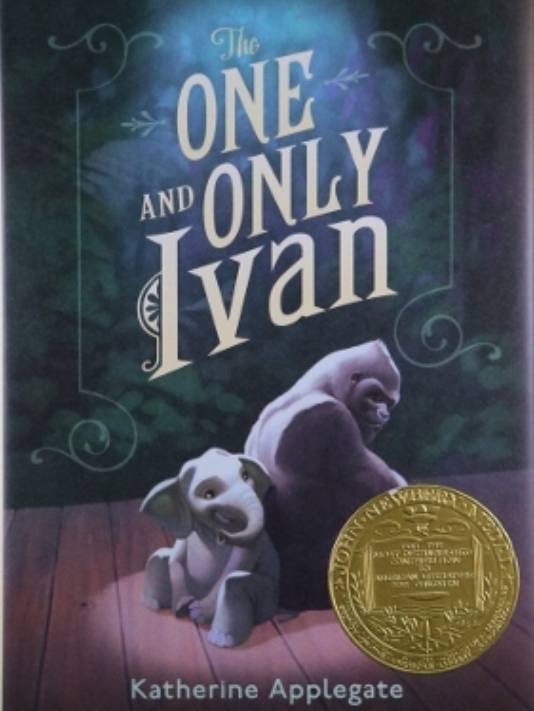
The One and Only Ivan

This novel is the 2013 Newbery Winner!

It was my first Kindle Fire read and I immediately thought of  it as the 21st century's Charlotte's Web so I am not surprised it won this award!

You can watch a book trailer and read more about it at:  http://theoneandonlyivan.com/

Also, this week the Washington KidPost editor, Tracy Grant, wrote an essay sharing lots of evidence as to why this is such a great read. Her essay makes both a strong read for how to write an essay recommending a book and also does a great job recommending this book! (So share it either in Reading Workshop, Writing Workshop, or both!

http://www.washingtonpost.com/lifestyle/on-parenting/newbery-medal-winner-is-easy-to-love/2013/02/12/3fd35536-6ca7-11e2-bd36-c0fe61a205f6_story.html?wprss=rss_on-parenting

Be sure to find time soon to read this book!!!

Sunday, January 27, 2013

TCRWP Reading Coach Institute

Five Day Coaching Institute - January 27 - 31, 2013

Day One - Keynote: Levers for Lifting Teaching and Learning in Schools by Lucy Calkins

Lucy highlights four "levers" that she believes can lift teaching and learning in our schools:
1. Teachers need to collaborate. The time of closing our door and doing it our own way is over.
2. Teachers need to identify and then hold tight to their beliefs. What are our core beliefs? For example, at TCRWP, they strongly believe in the work of Dick Allington, whose research shows that kids must read books that they can read with 95% accuracy and also, they need to read a volume of books. This is then held tight by having leveled classroom libraries and having their students record their reading using logs. We need to know WHY we are teaching something, instead of knowing what to do and how to do it.
3. In order to teach reading and writing well, WE need to work on OUR reading and writing. It is powerful to read a book closely and to work on growing ourself as a reader.
4. Performance assessment and self-assessments raise the level of achievement. When we give feedback, we must begin with the learner having a crystal clear image of what they are to do. Then they need time for repeated practice. Then two kinds of feedback needs to be given: First, name what they did well and tell them to keep doing it. Second, give them next steps. Along with the student getting this feedback, the teacher also gets feedback..."I did a good job because they are doing what I showed" OR "I need to fix this; the students is not getting it".

Finally, Lucy shared, "None of us can do this work alone. We ARE the conversations you are IN. When we are in a community of practice, we can do this work. We ALL carry the people we live with with us because we can't do this alone.


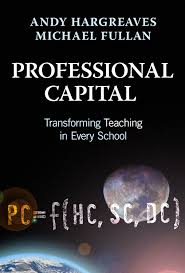
While sharing these four points, Lucy shared ideas from the following suggested reading:
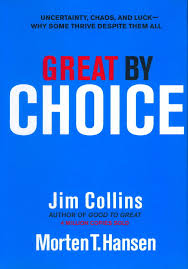


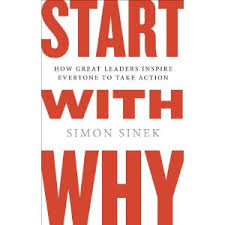
She also suggested watching  Simon Sinek's TED talk.

DAY TWO - PS 29, Brooklyn
Working with Staff Developer, Brooke Geller, we focused on AAA - assess, analyze, and adapt.
Brooke taught a mini-lesson to teach: Readers grow ideas about characters by envisioning what characters are thinking, feeling, and experiencing. She used the beginning of the short story, Stray, by Cynthia Rylant, a chapter in Every Living Thing. 

To ASSESS, during the link at the end, she asked the students to jot on a sticky their thinking about the character, Doris.

To ANALYZE, in minutes, she showed us how to make 3 piles to separate the jots:
1. OK jots that just retell
2. Better jots that retell with a a detail related to an initial idea
3. Even better jot this is an authentic idea.

Here are examples of the students' work:
1. I see Doris and the dog in the snow. It is cold.
2. I think Doris is thinking "I hope Dad does not take it to the pound."
3. Doris is thinking "I hope I can keep this dog. Doris is feeling nervous and is happy to have the dog come and is courageous to try to keep it."

To ADAPT, Brooke conferred with a student whose post-it said: I am seeing Dad rolling his eyes. I think she is thinking dad won't let her keep it.

She asked the student to underline the words in the post-it that match the teaching point which made her post-it look like this: I am seeing Dad rolling his eyes. I think she is thinking dad won't let her keep it. Yes, you envisioned and Yes, you added your thinking. Now...

Brooke asked her if this post-it was strong work for her or if she has better work in her reading notebook. She shared a time when she did better work by comparing and contrasting characters. Finally, Brooke's teaching point to this student was for her to ask as she reads, How can I make this post-it work stronger?

Reflection on AAA: I see the value in using this 3-part system with authentic thinking about reading. It is easy to gather post-its. I see how they can then be sorted quickly and with repeated practice of this, I know it will go even faster. Then I like how the MOST time is spent on adapting our instruction to specifically meet the needs of the student.

We also did a HALLWAY TREASURE HUNT. We had 15 minutes to go off into the hallways of this 5-story school looking for evidence of:
1. Units of Study being taught
2. differentiation being provided
3. engagement in work being seen
When evidence was found, we TOOK A PICTURE. Then we returned and shared our pictures.

Reflection on Hallway Treasure Hunt: I can see replicating this activity with my staff. It is a simple way for teachers to really notice bulletin board displays. Most of what was on display was published writing, math problem-solving work, and art work. I wondered why reading work was not seen? With my group we brainstormed a few ideas that could be displayed to show reading work: post-its can be displayed; scanning a book page with post-it stuck to it; thought bubbles about a book; fiction place mats showing a story map based on book read.

Day 3 - half-day at PS29 and half-day attending workshops at TC
Brooke taught an INQUIRY mini-lesson with 4-graders. Readers, we are going to play a game today and it will be a challenge. First listen to this part of Stray. (she read the part where the dog is kept in the basement during the snow storm). Now look at the 3 post-it note cards I gave to each partnership. Your job is to decide which jot deserves a clap, which deserves a double clap, and which deserves a big cheer. In partnerships, read the cards and decide. Be sure to name the work done on each card to help you decide which is strong, which is stronger, and which is strongest.

The three cards read as such:
* Doris opens the door slowly and notices the dog stretched out on the step. (a clap - just retells)
* Doris opens the door slowly and sees the dog. It is calm and doesn't bark. I think Doris wants her parents to love the dog as much as she does. (double clap - retells, adds thinking about one character.)
* Doris slowly opens the door and thinks "This is a wonderful dog," but her parents disagree. Doris' parents don't respect her needs. (cheer - retells, shares thinking about an idea and included main char and additional characters.)

As I listened in on the student discussion as they were trying to decide which jot was strong, stronger, and strongest, I was amazed at their precise dialogue. "This doesn't have any thinking; it is just retelling. These both have thinking." I can see using this very lesson using Stray once back at my school and then replicating with other jots. This inquiry mini-lesson was so powerful because it gave kids the opportunity to name the work done on a post-it. Then it also lets students see how to improve their work to earn a cheer by following the exemplars.

AT TC: Keynote by Mary Ehrenworth: Raising the Level of Close Reading
Teachers who want to raise the level of their students' closed reading, MUST be doing this kind of work themselves. Teachers of reading MUST be readers! Mary admitted that she is a good book reader but is not a good "reader" of baseball. What is it that YOU can't "read" well? For me, it is classical music and facebook!

Mary modeled an activity that we, as literacy leaders, might replicate with our staff.
* Immersion: We listened as Mary read-aloud from Stick, Knife, Gun. She reminded us to assume that EVERY detail of the story matters and so we were to pay close attention. She reminded us to pay attention to the setting and the character names and ages. After giving us a purpose, when she reread, I got so much more out of the story! She continued reading and asking questions as she highlighted the CCS #1-3.

Mary's BIG MESSAGE: To improve kid reading, start with adults and improve them as readers.

AT TC: Jerry Maraia: Raise the Level of Rigor for your Higher-level Readers
He had us read 2 paragraphs from the beginning of The Hunger Game and ask What is the story underneath the story? Don't just read it to be a "plot junkie"!

Assessment: He suggested gathering data by using one of the TCRWP Performance Assessments. Then collect the jots, match the responses to the continuum, and ask, where are 80% of my kids falling? Who is an outlier?

Text Bands: How are the bands (NOPQ / RST / UVW) different? You can confer with any book when you know a book's level and are familiar with the skills used at each band. Be sure to teach the skills that match the reader. If your kids are NOPQ readers, then don't teach symbolism because that doesn't occur until level UVW. Ask What big things need to be revised in my unit due to my reader's levels?

Craft: Reading like a writer. 1. Read the text like a reader. 2. Read text like a writer. Ask What are the moves the author made to illicit mood? How does the text make you feel? How does the author do it? Be sure to notice sentence, phrases, and words.

Writing About Reading: The Reading Notebook makes the reader's reading visible and is an invaluable tool.

DAY 4: All day at PS29 with Brooke
Two books recommended by Brooke:

Product DetailsProduct Details

Brooke modeled a new kind of  interactive read-aloud structure. Now, with the CCS, the structure angles the discussion to stay in the text.

Brooke also took us to a 4th grade classroom to observe a debate - the students against the teachers! The text used was Stray by Cynthia Rylant. The 3rd graders argues for Doris keeping the stray dog and the teachers argued for Doris not to keep the dog. It was a great structure to have the kids use evidence from the text to make an argument.Plus, it was fun to hold a debate!

After School Workshop: Ryan Canderlario: 10 Books that Make Great Read-alouds
This link takes you to a powerpoint (for a few weeks only) to see all 10 books:
http://tinyurl.com/b7ee8d8

My personal favorite is Z is for Moose!
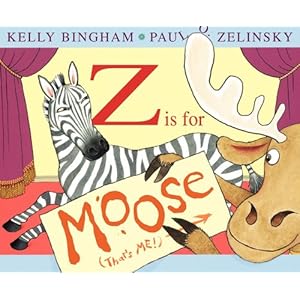
Z Is for Moose

Ryan also shared this youtube video to inspire us - so cute!
http://www.youtube.com/watch?v=l-gQLqv9f4o

Day 5: Highlights from Three Workshops at TC


Melanie Woods, retired Principal of PS 29 and now working for TCRWP,
shared during a Workshop at the Reading Coach Institute:

Building a community of practice that fosters collaboration and rigor means:
1. building a culture of trust and investment in relationships (with teachers, staff, principal)
2. building a culture of reflection; a culture that values time to process, think, and use data we already have, to plan forward
3. making time with staff to do meaningful work that builds capacity
4. getting behind our teachers as long as it doesn’t compromise what we know to be true and good for kids; Teachers’ opinions matter.
5. that no matter how much expertise you have, you must always position yourself as a learner willing to try things, make mistakes, take risks, and get down and dirty…it is a stance of inquiry that is priceless.

Kathleen Tolan shared during her workshop:
By coming to this institute, you SEE the possibilities. You experience Reading Workshop in classrooms, in schools teaching literacy through Reading and Writing Workshop. That is how TCRWP designed the learning. Without the vision, we can’t know how to do it. We need a picture to know what we are shooting for. We can’t just read about it or hear about it. We need to see it for ourselves!
Now as we leave our week of learning at TC, we return to our schools and begin to plan ways for our school’s staff  to “see it”.

Laurie Pessah shared during her workshop three kinds of LEARNING WALKS:
1. Walk-thru looking at a certain grade level and at a Bottom-line, for example classroom libraries, charts, minilessons, conferring, read-alouds, reading logs, partnerships, etc. As you walk, jot down what you notice and what you wonder. Then reflect on walk as a group and create some next steps.
2. Walk-thru of whole school. She suggested doing this twice a year - Oct and May. Go in every classroom looking for many categories. Again, notice and wonder and after reflection, make school-wide goals.
3. Walk-thru looking at teaching from the point of view of cognitive demand (the work of Norman Webb/Depth of Knowledge (DOK))

Sunday, December 30, 2012

VA 5th grade Writing SOL - planning to write a fiction/fantasy story


The VA Department of Education has released the 44 prompts. As I sort through them, I notice 3 KINDS: ones that require the writer to write an essay response; ones that require the writer to write a small moment, personal narrative; and ones that require the writer to write a STORY, often including fantasy elements.

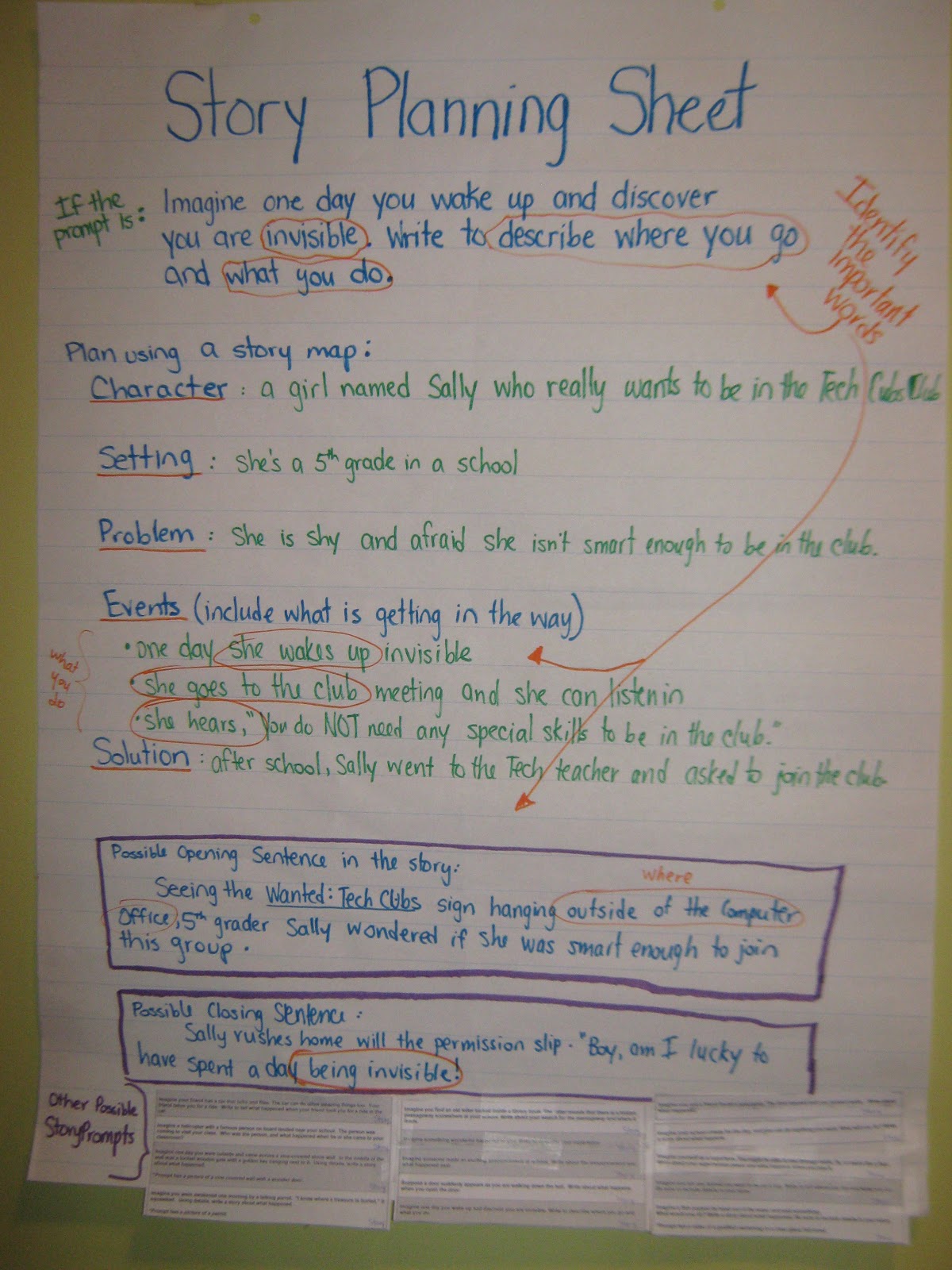
Here is how a writer can PLAN to write a STORY. A story map can be used to plan it. Lots of details are included so the reader can see the story as if it is a movie in their mind.


Prompt: Imagine that one day you wake up and are invisible.
Write to describe where you go and what you do.

Story Map Plan:
Character:           Sally, who really wants to be a Tech Cub.
(pick character name and descide what the character wants.)

Setting:                She’s a 5th grader at school
(name WHERE this story will take place)

Problem:              She is shy and afraid to ask to be a Tech Cub because she doesn’t think she knows enough about technology to join the group.
(name the problem)

Events:     She wakes up one day invisible.
(name the events that occur)
She goes to the meeting of the tech cubs being invisible and listens in

Mrs. Burk says, “I want to remind everyone. You do NOT need any special skills to be in this club.
You just need to be responsible, show up when needed, and be able to ask when you are confused. I am here to answer your questions and I will ensure that you will be able to do all that is needed to perform any Tech Cub task”

Solution:  After school, Sally went to Mrs. Burk and asked if there was still time to sign up to be a Tech Cub. Yes,” she replied. “But tomorrow is the deadline. You’ve missed just one meeting and I can catch you up on what you missed.
(name how the story is resolved)

Possible Opening Sentence to the story:
 Seeing the Wanted:Tech Cubs sign hanging outside of the Computer office, 5th grader Sally wondered if she was smart enough to join this group. “Probably not,” she thought to herself. However, she loved computers. How cool to be in a Computer Club.

Possible Concluding Sentence: 
Sally rushed home with the permission slip. “Boy, am I lucky to have spent a day being invisible,” she thought. I might have chickened out and not signed up to be in this great club. 


VA 5th grade Writing SOL - planning a Small Moment Personal Narrative

The VA Department of Education has released the 44 prompts. As I sort through them, I notice 3 KINDS: ones that require the writer to write an essay response; ones that require the writer to write a small moment, personal narrative; and ones that require the writer to write a STORY, often including fantasy elements.

Here is how a writer can PLAN to write a SMALL MOMENT PERSONAL NARRATIVE:  a TIMELINE of the scene can be used and l
ots of details are included so the reader can see what you saw and feel what you felt.

Prompt:  Think about a special event you experienced.
Write to explain the event and why it was so important to you.

PLANNING SHEET:
Special Event:          winning 3rd place in ALL Stars

Topic Sentence:
I have had loads of special events in my life. However, one stands out.
It is the time I got 3rd place swimming 50 butterfly in the All Star Meet.

Timeline:
1st: being VERY nervous just before the start of the race
o   too nervous to sit down and bounced back on forth on my feet. I must have looked like I needed to go to the bathroom!
2nd: Race begins     
o   The starter shouted, “On your marks, get set.” And then the electronic “BEEP” was heard. I immediately dove into the water, kicking and swimming the butterfly
3rd: Swim, swim, swim,
o   really fast turn
o    barely taking any time to lift my head to breath
4th: Slamming my two faces into the wall at the end
o   My timer saying, “great swim…your time is 36.6. I got 3rd
5th:A BIG smile appearing on my face.

Concluding Sentence:
Special events  happen  in my life. However, the time I got 3rd place
swimming 50 butterfly in the All Star Meet is very special to me.
 I got rewarded for being a talented swimmer and I will never forget it!


VA 5th grade Writing SOL - planning for an ESSAY PROMPT

The VA Department of Education has released the 44 prompts. As I sort through them, I notice 3 KINDS: ones that require the writer to write an essay response; ones that require the writer to write a small moment, personal narrative; and ones that require the writer to write a STORY, often including fantasy elements.

Here is how a writer can PLAN to write to a ESSAY PROMPT:  A Boxes and Bullet planning sheet can be used.
Prompt: There are many different kinds of entertainment, such as music, games, books, or movies. Explain your favorite type of entertainment and why you like it.

PLANNING SHEET:
A BIG IDEA to place in the BOX is: 
Reading is my favorite kind of entertainment.
  • Because when I read, it takes me to excited places
    • Harry Potter – a world with magic and castles and wands
    • Frindle – takes place in a school, always an exciting setting
  • Because when I read, I learn about other time periods
    • Number the Stars - taught me about the time during WWII
    • Ruth and the Green Book – taught me about the 1960s and the Civil Rights Movement
  • Because when I read, I laugh and sometimes even cry.
    • All of Mo Willems’ books make me laugh out loud. His characters are so funny!
    • Great novels, like Fig Pudding, help me to feel the sadness that the characters feel and I sometimes cry. 
    •  

Saturday, December 22, 2012

Essay Writing Unit with 5th graders

I am so proud of the 5th graders at my school! Using Book 3 in Units of Study for Teaching Writing, Grades 3-5 by Lucy Calkins, my students DID grow some BIG IDEAS!!

Here's how my lessons went day-by-day:
1. To immerse the students into reading this genre, I had them read essays, some from the Washington Post, some that other students wrote in years past, and a few that my daughter wrote to get into college.
(Search "essay mentor text" on this blog to find some possible kid-friendly essays). While reading, they needed to figure out the BIG IDEA ("box") and supporting details ("bullets") and I also had them name what KIND of detail was included (story, statistic, quote, observation, list) to get the idea across to the reader.

2. To help students generate ideas, I used Lucy's idea of looking closely at the small parts of our lives. I looked into my wallet that I carry with me always. Looking closely, I saw ALL these cards:

Then I tried to let what I saw spark an idea. In my notebook I wrote:
1. reading books is important (inspired by the library cards and Barnes and Noble teacher card)
2. saving money is important (inspired by the grocery store discount card and the Staples discount card)
3. using mass transit is helpful (inspired by the Amtrak card and Metro card)


3. Another generating idea shared was to think about the issues in our world. Here's an anchor chart of 4th grade issues that hangs in a classroom at PS41 in Greenwich Village:

Once you pick an issue, we jotted down thoughts in our notebook about that issue.


4. My collegued shared one more generating lesson: Think about a subject and your ideas about it. She read-aloud a persuasive writing piece about the importance of zoos and listed all the advantages that zoos provide. Then the students could pick a subject of their choice and jot down ideas about it. Our anchor chart while we were generating ideas looked like this:


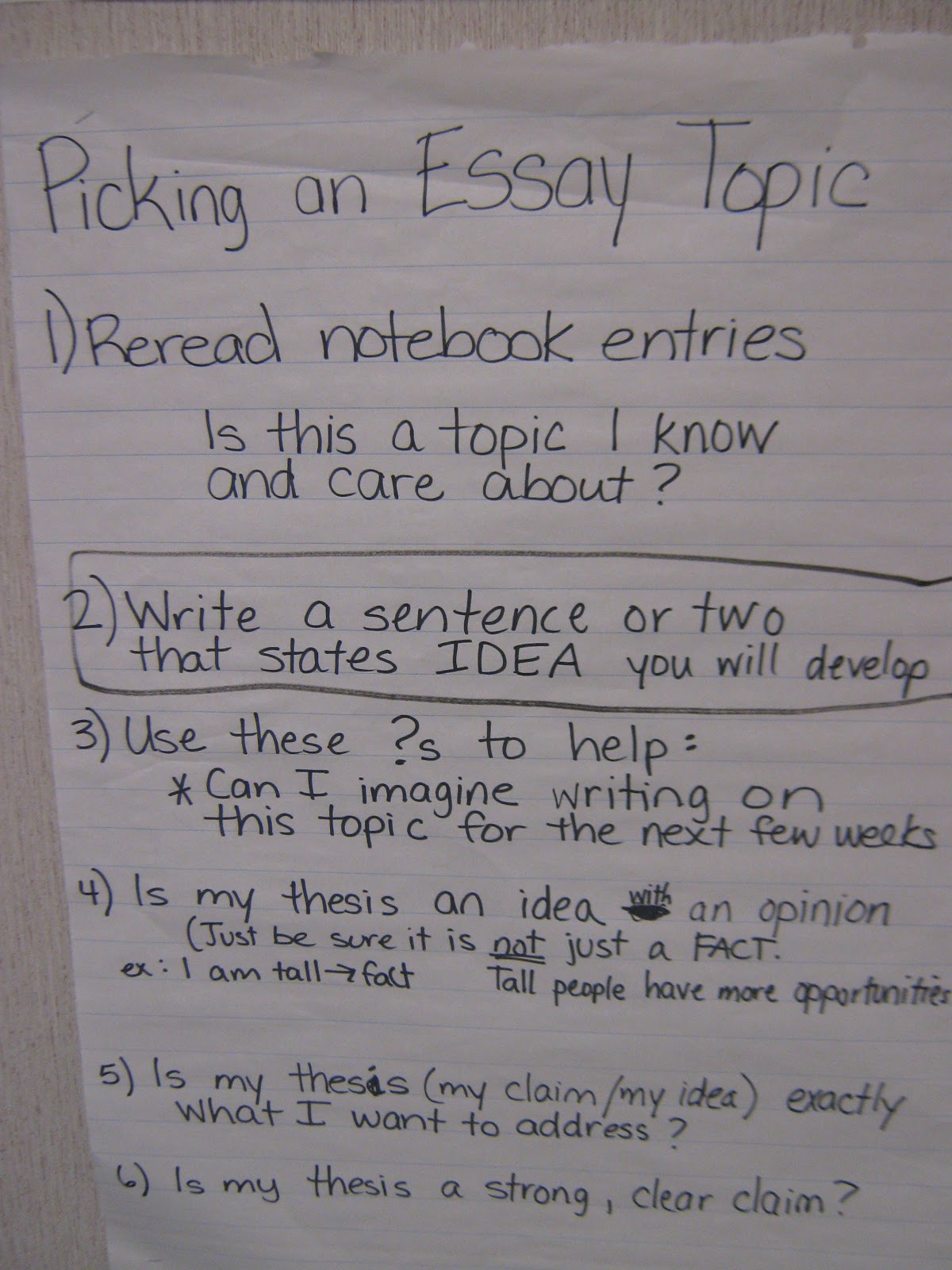
5. Then it was time to PICK an idea and write your thesis statement, your claim. Here is the anchor chart we used to help them with this step:
Once an idea was picked, we intoduced the organizing structure of BOXES AND BULLETS.
The BIG IDEA goes in the BOX and the reasons that support this idea are the BULLETS.

We also tried out a few ways to get our BIG IDEA across.
My BIG IDEA became:
PEOPLE LIVE BETTER WHEN THEY READ

Then I brainstormed MANY ways to get this idea across:

Reasons: because FICTION, NONFICTION, ESSAYS help them live better

KINDS: because of NEWSPAPERS, PRINTED BOOKS, E-BOOKS

PLACES: at school, at home, in free time

PLACES: using libraries, using bookstores, using newspapers

PARTS: brain, emotions, physical body

In the end, I chose the REASONS and to help me stay organized, I placed my BIG IDEA on a BLUE paper folded like an hamburger and one reason each on a PINK paper folder like a hot dog.


6. At this point, my collegaue and I checked BIG IDEAS and ensured that each of the 3 bullet points were different ideas related to the BIG IDEA. Once we approved it, students could get their blue and pink paper to come out of their notebooks and start to draft their essay, point by point.

7. Drafting lessons included us modeling how I can write a story to support the bullet idea. I can also gather statistics, a list, or a quote. As I gathered writing to support the point, I placed it in the corresponding pink folder.

8. Once each pink folder had a piece of writing or several pieces of writing, I showed how the bullet point on the front of the pink folder can become the TOPIC SENTENCE and how then I can decide how to include the story, list, quote, or stat that I collected. I literally taped pieces of writing together or used arrows to show what to read first, next, etc. I included a lesson on using words such as FOR EXAMPLE, ANOTHER REASON, ALSO, IN ADDITON to have smooth transition to get the point across.

9. Then I taught lessons on how to START and END an essay, emphasizing certain sentence stems they could use as shared by Lucy.
Ways to Start My Essay
1.       Tell a story about one person needing the information in the essay:
My daughter came home from school annoyed that she had to read an assigned book. I tell her, instead, to be grateful for this assignment because reading that book will help her live a better life.
2.       Many people think reading books is just a fun thing to do. However, I have come to realize that reading is so much more than just entertainment.  I now realize that people live better when they read.

3.       Have you ever wondered why schools continue to teach reading, even after kids have learned to read by 3rd grade? I now realize that the skill of reading is so much more than just decoding the words. By reading, people live better.

4.       Why must students read for 30 minutes a night as homework, after reading that long or longer in school? Read on to find out why reading is so important.
Ways to End My Essay
1.       People live better when they read is true. Because of this novels, travel books, and the Washington Post editorial page will continue to be stacked on my night stand and read! How about you?

2.       I realize that when I finish a great work of fiction, I add to my strategy list of how to deal with others. Additional useful knowledge is always gained from reading nonfiction and essays. Because I want to live a great life, novels, travel books, and the editorial page of the Washington Post will continue to be on my nightstand. I recommend you read, too, so you can live a better life!

3.       I realize that Thomas Jefferson, who said, “I cannot live without books,” also understood that by being a reader, he lived a better life. I realize that novels, informational texts, and editorials must always be a part of my life. With them, I live a better life. I suggest you do the same!

10. PUBLISHING PARTY!!
All had an essay to share at our Essay Writing Celebration. Some had time to type it up. Others had it hand-written. Some had it in order, in still in their blue and pink paper-folders, and followed their arrows to know what to read next. Before starting to share our writing, we discussed the role of the listener and brainstormed words we might use as we comment on the essays we listen to. Here is our list:


One brave student agreed to read his essay aloud - All people should stop war. Then, as a whole class, we gave comments using the sentence stems listed. Next, we got in triads, spread out through the room and shared our essays aloud and listeners shared comments.


Some of the BIG IDEAS shared included:
People should play soccer safely.
People should have pets.
Bullying is bad.
School supplies should be free in poor countries.
Motorcycles is not the best kind of transportation.
Bolivia is a great county.
6th, 7th, and 8th grades should be in Middle School.
Parents should always pay attention to their children.
Taxes are unfair.
People should not waste paper.
Sea Turtles should be saved.