Tuesday, August 5, 2014

2014 TCRWP August Writing Institute - Day 1

Keynote - Lucy!
Lucy opened the Institute in the majestic Riverside church, my 8th, her 66th Institute! She began by pointing out how, in just the past three years, so much has changed in our writing instruction. Now students hold in their hands powerful checklists. Now read-alouds are not only oral or shared once. We reread, looking closely and quote the text during the Grand Conversation. Students now read, think and say "I take the position that..." Then she reminded us and herself that the change is with this goal in mind: to give kids world-class writing instruction.

However, she reflected that in the push to reach this goal in a CCSS world, she wondered if things we learned 30 years ago were being left behind. She found a 30-year old video from when she interviewed students to ask them about writing and was able to share an except with us. WOW! The girl responded emphatically that writing is important. "When you write, it is yours...You can get your anger out on your paper...It helps with your feelings...You write whatever you want...You are the mother of that story." This video seemed to remind Lucy of that important lesson she learned 30 years ago, that we author with meaning. "We take a moment, spin it, and make significance out of the grit."

She challenged me to reflect on MY life theme and then teach, bringing ALL of me to my work. She suggested, after reflection, that I reread the CCSS with the lens of my life theme. Just as she will ensure that she teaches about the CCSS Writing standards with the importance of authoring meaningful work, I plan to reread the standards with my own focus. No matter what, I will recall that girl speaking to Lucy on the black and white film from 30 years ago who was so wise - "I am the mother of my writing!"

Annie Taranto - Literature-Based and Researched-based Argument Essay
Annie reminded us that we can write about the thinking we had as we read as long as we are reading and thinking. She shared a structure that only took 5 minutes called "Speed Booking" to create a book buzz and encourage student reading. I planned a 30-sec buzz about my book, much like the kids at the end of a Reading Rainbow episode did. "Have I go a book for you!" Then  I paired with one person and in a minute, we shared. Then we repeated 2 more times. Now I have 3 new titles to consider reading! I definitely plan to use this structure with my 5th graders this year!

Then Annie spent the rest of our time having us have an Argument about The Giving Tree - Is the tree weak or strong? I have done this before with Mary and with my 4th graders last Spring but doing it again gave me more practice! I was reminded that the skills involved are stating a clear claim, stating reasons, giving evidence, and offering a counterclaim.

She ended by pushing us to generate our own ideas about a text without being told the debatable topic. She suggested we: 1) go back to he text 2) Notice details 3) Write to grow an idea. We tried it with the text we are reading (I'm reading The Lightning Thief, finally - somehow I missed reading this series!) and for homework I am to create more writing entries.

Colleen Cruz - Mentor Text
Our first exercise with Colleen was to pick one of these five genres - Play-writing, Guide Book, Poetry, Journalism, or Biography and sit with the others that chose that genre and together think about what you know about this genre. Then we spent 10 minutes trying to write in that genre. However, we were to pick the genre that we knew the LEAST about.

I chose PLAY-WRITING and my group discussed how when writing, lots of dialogue would be included and also the stage directions. We thought about looking at Readers Theaters to help guide our writing or a familiar text and turning it into a Readers Theater.

Then we returned to our seats and Colleen reminded us that to write in a genre we don't know much about, it is really important to READ that genre. "When you need to write something, you look at an example of it." Mentor Text = exemplar = touchstone text

Colleen pointed out that a mentor text is one text (duh!). A Mentor Author is when you study their whole body of work and their comments about their writing process.

By Wednesday, I need to bring in a MENTOR TEXT and Colleen gave suggestions of what to consider when choosing it. Mostly, I need to love this book! It needs to have examples of my teaching points for the unit I am teaching and it needs to be approachable to the levels of my students.
She suggested visiting in New York:
1. Stand Book Store (by Union Sq)
2. Bank Street Book Store (Broadway and 112th)
3. Books of Wonder (in Chelsea)

Then she gave us a few ways to use mentor texts during a Unit of Study:
1.  A few days before launching a new unit, gather baskets of text of the new genre unit. Ask the kids to bring in their own examples from home. Then have the kids sort the test - yes, it is an example of the genre/maybe/not. Create a chart together listing all we know about this genre now after looking at all these mentor text.
2. Just pick one text that you love and use it during the unit.
3. Teach the students how to choose a mentor author and then ask kids to see if their author has written in this genre. She suggested that you could set up a dozen baskets of mentor authors. In each basket, place the works by that author and also the author's bio. Students can spend a week perusing the baskets and at the end of the week own an author! Colleen pointed out that a mentor author is one who has written in at least 2 genres.

Finally Colleen read us The Silver Button by Bob Graham
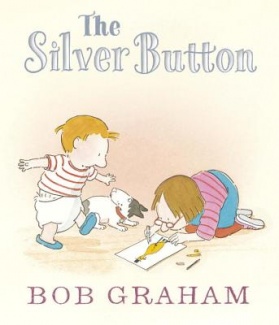


As she read, we were asked to notice the ordinary moment, which the book is FILLED with. ALL the things that occur at 9:57am. I found the repetition of the list very moving. I can see how using this mentor text could help that writer who struggles with generating an idea to write. I found comfort in seeing how so many different stories can be told about one moment in time. I plan to get this book!! So glad Colleen shared it.

Closing Workshop - Colleen on Practical Tips for Teaching Fiction in the Beginning of the Year
Since I haven't had enough of Colleen yet, I joined her for her closing workshop. I have taught the fiction unit for the past 3 years but it helped to hear some reminders from the author of that Unit of Study!

WHY teach a Fiction Writing Unit?
Kids LOVE it and at the beginning of the year, they are reading fiction.

Bend 1: Plot and Character Development
* I could write about a character who.... (Somebody-Wanted-But-But-So)
* Think of a plot based on something in your life, based on a story you wish existed, or on an issue you are passionate about
* Think of a story based on a setting - what stories could happen on a playground? the subway? church? principal's office?
* Read the headlines in the newspaper and create a story off of this (Eric Carle did this in 10 Little Rubber Ducks!)
Once you have he plot, develop the inside and outside of the character. She suggested thinking about what would parents name this character? What country are they from? Are they more conservative and name their children after a relative? Or a bit wild and name their child after a movie star!
She suggested you start adding to the inside of the character (hungry for friends) and then think about what this would make the character look like on the outside (wears trendy things like a loom bracelet).
She suggested that the students try out the character in an everyday scene - writing about the chracter waking up in the morning or the character at recess. The "scene bootcamp" will help they to know their character!

Bend 2: Plot and Draft
She suggested planning for a whole class period on looseleaf so the teacher can collect it and read it overnight. Just 3-4 scenes should be planned so it remains a short story and not a novel. As you plan, try it a few different ways. One time starting the story here...another starting here.
She suggested that as they draft, encourage them to draft out of order. Draft the scene you love the most first! Then once all is drafted, put it in order and add the transitional words to get you from one scene to the next. She said this technique seems to help them to write scenes and to avoid just a summary being written.

Bend 3: Revision/Editing
Always base these lessons on what you notice after looking at the students' writing assessments.
Most common revision lessons:
* grounding the dialogue by include action, setting and feelings
* use specific details connected to what this story is about (if it is about a rich girl and a poor girl, include that one wears an Abocrombie t-shirt and one wears a Walmart Disney t-shirt)
*Symbolism - what could become symbolic? Make that object more important.
*Word Choice - focus on the nouns and the verbs
*Leads/Endings - connected in some way
Editing - what do these students need help with most
*punctuating dialogue
*tense consistency
*avoiding passive verbs (was walking) and using active verbs
*pronouns - not being clear as to who the he/she is)
*run-ons
*be sure to spell important words correctly (If is is a story about best friends - spell friend correctly!)


Wednesday, July 16, 2014

Videos to use during Writing Workshop

Twitter really is an amazing form of professional development. I discovered this link yesterday:
The Best Video Clips On The Benefits Of Writing Well — Help Me Find More | Larry Ferlazzo’s W… larryferlazzo.edublogs.org/2014/07/13/the…
I discovered his list of four videos: 1. Denzel tells the boy visiting him in jail that writing is his "sword", more than fists, he uses it to change his world! 2. A blind man's sign is changed to use more precise words which causes those around him to act differently - so moving!! 3. Famous people share how they use writing in their lives. 4. Regular people share how they use writing in their lives. I plan to use these videos he found to motivate my students in Writing Workshop when school starts in September!!
I replied to Larry with videos I learned about at a workshop at Teachers College posted to my blog here: Videos that Inspire Readers/Writers to Keep Going
I am so glad I follow twitter and can connect with such smart educators like Larry!
I very likely will never meet Larry but thanks to twitter posts and blog posts, he is now a go-to resource for me as a teacher!

Saturday, July 5, 2014

2014 July TCRWP July Reading Institute – Day 5

Book Clubs – Mary E.
Mary had us sit with our fiction book clubs right away and handed out an overview of Kylene Beers’ Notice and Notes book. She asked us to skim through our post-its made while reading our club book (I am reading Goldfinch) and decide if any are moments where a character in the book:
* Has an ah-ha moment
* Says a wise thing
* Acts in a contradictory manner
* Asks a tough question
* remembers something that interrupts the story moving forward
or  * notice if events, images, or words are repeated

Her opinion is that Kylene’s technique is a starting point for teaching students how to make annotated notes. She pointed out that a plus is it keeps the student in the text. However, it does not encourage them to respond to why the author had a character act this way, the craft. To help with craft, Mary gave us a handout of fiction techniques and goals that the technique lead. In our clubs, we continued to use these strategies to talk about our book club fiction novel. I do see these being strategies I could use definitely with UVW readers and maybe RST, too.

Mary finished our week together by suggesting 3 ways I could return to my school and share my learning.
* Study Group – teachers choose to join and come together to discuss a topic, return to classroom to try things related to a topic, and return to discuss some more. They may decide to read a text together.
* Workshop – I would ask teacher to come learn about a topic that  I am knowledgeable about and provide time to for me to teach and time for teachers to practice the task themselves.
* Think Tank – a group of teachers who come together wondering about how something will work. They agree to try things out, do research, and meet together to figure out more about the topic.

With all of these ways, Mary emphasized the importance of having the teachers try the work themselves. She used the sports analogy – if you are wanting to get better at running, you do not just sit around the table and talk about running – YOU RUN!

She also suggested a book – Quiet Leadership by David Roth

SS Centers – Kathleen Tolan
NF Read-Alouds –Kathleen showed us a vimeo video of her reading aloud Seymore Simon’s Gorilla. Each partnership had a word bank and a map of Africa to refer to during the read-aloud. What stood out was the engagement of the class as they used the materials during the turn and talk time of the read-aloud. She also guided them through her questioning and think aloud to the bigger question of adaptation. She pointed out that this is a very easy structure to use – 1 book and a ½ class set of materials.

I know for a fact that I haven’t spent much time doing NF Read-Alouds. I always for fiction read-alouds. I vow to change this habit!

Compare/Contract Primary Sources
Kathleen showed us the Paul Reeve’s engraving of the Boston Massacre. Then another image of this event and a third image. In small groups we discussed how they were different and why they were different. Our inquiry led to the idea of bias by the person making the image, the idea of propaganda. She also shared a Cobblestone article related to the Paul Reeve engraving. Then we had a whole class discussion using the images and article as evidence of our thinking.

Storytelling
Finally Kathleen shared the idea of Storytelling. She placed a page of 6 images on the screen and began to tell the story of Paul Reeve’s ride. She pointed out that after she did this, kids began to find more information to add to the storyboard to revise the story. A colleague shared www.tellagami.com as a possible online storyboard. She ended by sharing a 6th grader’s documentary on the Depression. Very impressive work!

Closing Celebration
The theme was music! Piano playing greeted us as we entered the Cowin Center. Then Ryan’s group came on stage and sang 3 popular songs where they changed the words to celebrate reading.

The words to Roar by Katie Perry became:
Soar
I got the eye of the reader, a thinker, meeting with my partner
Cause I am a reader and you’re gonna see me soar.
Higher, higher than a mountain
Cause I am a reader and you’re gonna see me soar.
Oh, oh oh oh oh oh
Oh, oh oh oh oh oh
Oh, oh oh oh oh oh
You’re gonna see me soar

The words to Room by Magic became:
How you gonna read so smooth?
Don’t you know I’m fluent too?
How you gonna read so smooth?
I’m gonna reread it anyway
Scoop uo those words
Scoop em up, scoop em up
Scope up those words
Yeah, let em hear what you say
Reread those words
Reread them many ways
How you gonna read so
 Smooooooth

Finally they changed the words to Fancy:
I’m so fancy
I can let it show
I’m growing new thoughts
From page to post it note
I’m so fancy
Make ideas grows
Comp – re – hen – sion ‘bout to blooooow

Then 2 beautiful voices sang For Good from Wicked.

We paused to remember the passing of Walter Deam Myers as Audra read Harlem.

Finally Kathy Collin’s humor had us laughing and ready to head home, grateful for the week together.
Grateful to be a teacher of reading!

I am TRULY grateful to be part of the #TCRWP community!! She off-handley suggested that we return to our towns and stay connected. Maybe I'll reach out using #TCRPWDC3 or #TCRWPFCPS (my two favorite districts!)


Wednesday, July 2, 2014

2014 July TCRWP Reading Institute - Day 4

Book Clubs with Mary E.
What a great 30 minute discussion our club had with another book club today!! First Mary had us plan out a 10 minute presentation by prompting us to think about what we want the other club to know and feel about our rainforest topic and decide what we can show them as well as tell them?


Our 4 members decided what we would each share. I was taken by the sentence in the book that said, "Tropical scientist believe that, at the present rate of destruction, there will be no rainforests left by the year 2050." I shared this fact and pointed out how this is just 37 years from now. I stressed how I plan to still be alive in 37 more years and I want to live in a world WITH rainforests.

After our 10 minute presentation, the other group shared. They had read the same book but interestingly enough, their presentation had no overlap with ours. Instead, they noticed the strong structure of the book Even though I had been reading this book for 3 days, I learned so much more listening to their 10 minute presentation.

Then for the last 10 minutes, Mary had given us another text, Causes of Climate Change by Peter Benoit. Now we were to discuss any connections we saw between this new text and the book we had been studying. Again, such rich discussion based on our reading.

My big take away from being in a NF book club was how my reading and thinking about a nonfiction topic pushed us all to think more about the actions we can take so we can live better. I love that I did so much more than just read the book once or twice and notice all the text features (I'll admit - my old way of reading NF). Mary got me to read, question, seek more info outside the book, feel something about this topic, and contemplate the actions I can take to be supportive of this topic.

SS Centers with Kathleen Tolan
First Kathleen asked each group to think about a BIG IDEA related to the center work we have done so far, write it on a post-it and put it on the BIG IDEA poster.
We wrote:    Sanctions don't necessarily work.
Other groups wrote:
Colonial boundaries changed over time.
Slaves were traded as resources.
Access to knowledge is empowering.
Gender determines the future of a colonist.

Then we all walked around the room and revisited the Drumroll Write-Around images we worked with on Sunday. Our task was to notice if any of the BIG IDEAS related to any of the images.  For example, I noticed an image of the Stamp Act and placed our big idea on it. My take-away from this whole class activity was that it helped me to synthesize all the learning I have done so far this week related to Colonial history and now our group is ready to dive into a new SS Center!

Kathleen had us do one more whole class activity - Quotes.
She asked us to read four quotes said by people in Colonial times, noticing who is saying it and when it was said and if any of the quotes goes with any of the Big Ideas. After a small group discussion around one quote, she asked us to pick another quote and write about how it fits with a big idea. She reminded us that finding quotes is so easy - just google quotes!

Finally, Kathleen gave us some questions to ask as we think about planning strong SS Read-Alouds.
What reading skills do we want to emphasize?
What writing skills? What notetaking skills?
What content targets will be covered?
What vocabulary should be in the word bank?
What visuals should be included?
What partner materials need to be xeroxed?

Closing Workshop by Mary E.  -  Reading Work for Strong Readers
Mary pointed out that sadly our strongest readers get the least attention and are the most under taught.

She shared 5 ways to grow avid and powerful readers in Reading Workshop.
1. Series Work - she highly encouraged us all to read at least the first book in a few series, recommending the Spiderwick Chronicles series, the Dragon Slayer series and the Percy Jackson series. Across the series, the characters change profoundly and we can suggest to storng readers to read a series and look for these changes. She had us watch a scene from the Harry Potter #1 movie and then from Harry Potter #5 movie noticing how Harry and Dudlee are in each and how they change. I thought it was brilliant to watch this and notice the change that as a strong reader, I'd need to hold onto across MANY pages as I read multiple books in a series. Work a student can do while reading  series books in RW include:
* tracing the setting and its atmosphere and its impact on the characters
*analyzing what's happening now and what led up to it
* tracing traits vs emotions and how they shift
*problems that are solved and not solved across books
*how characters change across 100s of pages

Then Mary shared this list of series from the TCRWP website-  Series Course of Study - brilliant list!!

2. Literary Traditions - let kids read the kind of genre they like and lots of it to study it by:
* read 4 historical fiction books and notice the characteristics of the genre
* notice the structure of the genre
* look for archetypes
* look for common themes
When they start a genre study, confer with them and tell them to pay attention to:
* backstory
* objects and symbols
* archetype is a villain or a hero and is the hero traditional, reluctant or an anti-hero
* look for signs of technology and of the age - future, medieval, now with magic or a hybrid

She showed us a video scene from the beginning of Treasure Planet where we could predict the boy would become the hero. She reminded us that if we really know the literary work, we will get why it is unfolding the way it is. Be ready to reread and see if you missed anything.

3. Author Inquiry- have kids read many books by the same author and ask:
* what kind of trouble interests this author?
* what lessons does this author tend to teach?
* is any social history included by the author? For example, Matt Christopher has been writing sports books since 1953. She suggested have kids read his books in publication order and notice how the time period of each book is portrayed. Are athletes and sports' issues different in books published in different times?
* what is the author craft or what makes this book a book by this author?

4.  Bands of Text Complexity - She suggested working with a group who is moving to a new band to coach them in knowing what to expect. For example a group entering the UVW band could read The Lightning Thief and be reading to see how:
* the characters are not what they seem
* character traits are no longer stable
* problems cascade
* character flaws often affect the big conflict
* power and resistance will be visible in small acts and symbols
* symbolism shifts
A possible book to have kids read at each band:
KLM - Magic Treehouse
NOPQ - Spiderwick
RST - Bridge to Terebithia
UVW - Percy Jackson
XYZ - Hunger Games

5. Critical Literacies - read and note:
* who is included?
* who is invisible?
* who is marginalized?
* who is destroyed / honored?
* how is hegemonic masculinity and femininity portrayed?
* are gender norms reinforced? interrupted? shown alternatively?
* who has the power? resistance?
* how are sexual identities portrayed? racial identities? cultural identities?
She noted that video clips are a great way to introduce critical literacies.

She also noted that this is a favorite book of hers:


Keynote - David Booth
He is an educator from Toronto, Canada and author of:
Literacy TechniquesIt's CriticalReading Doesn't Matter Anymore...Even Hockey Players Read


His dry humor reminded me of poet, Billy Collins, and he had us laughing many times during his talk! He emphasized that we need to teach kids to be literate in ALL text forms they will encounter in their lives. He made a list, with the help of the audience, of what we CAN'T read including sheet music, the stock page, braille and computer coding.

We pointed out that we need to rethink the literacy world. Am I a literacy or literature teacher?
He said our goal should be that our students will say, "It was worth being at school today."
They WILL say this if we teach them how all texts works!


Tuesday, July 1, 2014

2014 July TCRWP Reading Institute - Day 3

Book Clubs - Mary E.
Mary had us do a bit more Argument Debate work related to yesterday's Keynote! First she pointed out that even quiet kids participate when you use this structure because the quiet friend only has to talk to one other person! Also, when she has students write long and strong after a debate, the struggling writers are able to write so much more because they had time to orally practice and hear ideas from their partner. And the stronger students start to add counter-arguments to their writing.

She said the next step after holding many read-aloud debates is to have students start to create their own debate topics. So she asked us to do this using our nonfiction book club books. Our table was reading about the rainforest, others were reading about tsunomi and hurricanes. She suggested debates such as:
* Hurricane are worse than tsunami   VS   Tsunami are worse than hurricanes
* Destruction of the rainforest is worse for natives   VS   Destruction of the rainforest is worse for the world
* Is the effects of a hurricane worse the day after   OR   months later?
* Should ALL be prepared for a tsunami  OR just those areas where tsunami's tend to occur?

At our table of four, two of us were Partner A and two were Partner B and two AB partners were formed.
She coached us orally by saying: Write down your claim, your reasons, your evidence. You can use Boxes and Bullet notes . Look back into your book for a quote, a statistic, an image. Once we went through the Argument Protocol, she had us write long and strong about our topic. I had SO much to say!!

Then we switched gears into NOTETAKING. Since we are getting ready to leave our NF book club book, she asked us to take 15 minutes alone and decide HOW to best make a notebook page to hold onto the information we read and the thinking we did. She emphasized that it is important to have students make notetaking decisions so when they get to HS and college, they can handle taking notes while reading the dense texts they will be assigned.  I chose to make 3 columns - one with facts about the rainforest, one with the problems rainforests have now, and one with my written reflection related to my reading. Then Mary had us take a MUSEUM WALK so we could see ALL the different ways notes were taken. Two cool electronic pages of notes were created using POPPLET (http://popplet.com/) and PicCollage (http://pic-collage.com/). Museum walks helps us to see the many ways to organize information!

SS Centers - Kathleen Tolan
Kathleen also talked about NOTETAKING today. She suggested modeling HOW to take notes during a read-aloud so students can see different ways modeled. She also emphasized that students must gain independence in this skill. We need to model and then let them decide what works best for them. She shared examples of Boxes and Bullets, Bullets and Boxes, Sketching, a chart, a web, and a timeline.

To help us get good at this, we played NAME THAT STRUCTURE!
She shared a text and we needed to name its organizational structure and why we thought this. Is it cause and effect? How do we know? Is it pro/con, problem/solution, chronological, main idea.details, or compare/ contrast? She suggested and I plan to find examples of text of each structure to add to my ToolKit!

Closing Workshop - Alexandra Roman
Using Drama and Role Play to Engage NF Readers

If anyone looked in on HM Room 140 at 1:30 today, they would have wondered what was going on?! Alexandra taught us how to read NF text and have partnerships Turn and Act. She read a bit about bats. Then Partner A acted as the bat who eats fruit and Partner B as the one who eats insects and soon arms were flapping and mouths chewing!

I am sold. TURN AND ACT is a new directive I plan to use often during a NF minilesson!

Keynote - author, Jacqueline Woodson
She was introduced so beautifully with these words - "With her books, we don't have to walk through the world alone." If you don't know this author, check out her website to see ALL the books she has written:
http://www.jacquelinewoodson.com/

I got such goosebumps as she recited from memory a part of her book, Locomotion. She spent much of the hour reading from her work, including Feathers, Each Kindness, and her newest book due out August 28th a memoir called Brown Girl Dreaming. (You can order it on Amazon now -http://www.amazon.com/Brown-Girl-Dreaming-Jacqueline-Woodson/dp/0399252517 )

She is the first person I have heard who uses the SRA kit as a mentor text! She admitted reading the SRA cards in school growing up and to her, they were vignettes,  small moment. When she writes now, she is writing one vignette after another, much like those cards from yesteryears!

She also recalls being read The Little Match Girl and The Selfish Giant, two books that have inspired her writing today.


Monday, June 30, 2014

2014 July TCRWP Reading Institute - Day 2

BOOK CLUBS with Mary E.
We got into our NF Book Clubs where my group is reading The Rainforest (so we named ourselves The Understory!) and Mary gave us a few tips:
1. always think before you start
2. gather your materials so you are prepared to share
3. may need to recall work done prior (previously...)
4. briefly set protocols (timekeeper?)
5. make adjustments as you go
6. keep track of ideas and questions shared
7. allow each to share favorite part

"Remember, we are not sharing our first thought. We are sharing our best thought."

As groups finish book and prepare to move to another book club book, they can decide what to leave behind with the text set for the next group to have. We decided as a group to add pictures of rainforest plants, video of the Amazon flooding, and Smithsonian articles about the reainforest.

SS CENTERS with Kathleen
My group grabbed the Cause and Effect Center. It was a green folder with 7 articles and a task sheet that said to talk and take notes about the Intolerable Acts. Kathleen pointed out that the Task Card is NOT an assignment. It is a jumping off point for the group. Our group of 6 each took one article and then admitted that we weren't sure what the Intolerable Act was. One in group said, "I can read my article - it defines it." As she read, she mentioned the date of the Act and then all began to chime in as to how their article fit. "The Boston Tea Party is explained in my article and it happened before in 1773." Kathleen gave our group just 15 minutes. During that time we realized:

  • we were involved in rigorous reading, thinking and notetaking
  • it was an inquiry approach; we did NOT know all about our topic so we had to talk it out.
  • all were engaged and motivated
  • we ended with questions we wanted to find the answer to when we return to our center tomorrow
  • THEN we get to change to another center after 3-4 days!!
Then Kathleen showed how we can closely read a SS Video.
First, she shared a map of the 13 Colonies - what do you notice? 

Then we watched a Video about the forming of the 13 Colonies for the first time and talked about how the colonies were formed using the map as a reference.
Then we watched the same video again, this time taking notes on either the people, the groups, the events or the pros/cons of the land. Afterwards, we shared our notes in our group of four.
Then we watched the video a third time, taking notes about a different topic, adding to notes shared by the group member.  
By watching closely (and having a different lens each time) I actively learned SO much. This is a brilliant way to learn SS content material!!

Kathleen said a final task could be to assign a section of the 13 Colonies (New England, Middle, Southern) to a group and they can use all that they know to make a chart to hang in the classroom.

CLOSING WORKSHOP on RW TOOLKIT with Brooke
Tips to use to get kids to talk well during a conference:
1. teach the student what their role is during a conference
2. encourage the use of charts while talking about their work
3. show kids one of the conference videos and ask them to notice what the student is doing and what the teacher is doing (she suggested using this one: http://vimeo.com/album/2777084/video/55957323
and then chart what is noticed

Tips when you, the teacher, are not sure what the conference strategy should be:
1. spy on yourself as a reader and then turn own reading struggles into strategies to teach students
2. get to know the bands of text difficulty (KLM, NOP, QRST, UVW) and teach into skills needed at this level or at next level
3. read a text from each band so you "see" the characteristics

TOOLKIT can have the text band info, cut and laminated and placed on a ring or added into an index flip book, or added to a larger sketchbook reading kit. Also add the text band sentence starters. (Both can be found in the materials we received at the institute!)

Think about WHAT reading levels you have in your class. READ one book from each level and get good at understanding the conceptual work the kids will be doing who read at this level. 

Tips when you are not sure who to confer with:
1. make a conference sign-up
2. Ask kids to place their best post-it on their desk. Quickly read and sort these based on skill level being shown through their writing and decide quickly who to confer with using this data.

KEYNOTE - MARY E. on Argument in Reading Workshop
By using the argument protocol in RW, students learn to support ideas with evidence, deepen logical thinking, learn technical language of arguments, are able to defend position with fluency and grace and learn to not argue to win but to find common ground.

We do this work in READ-ALOUD so all can access the reading level. Mary followed this protocal:
* teacher sets up the argument and partner positions
* a close reading is done and text evidence is gathered by students
* one minute only is given to defend position
* calibrated feedback is given by the teacher
* the cycle is repeated

She read us Fly Away Home by Eve Bunting
1. In a partnership, we gathered evidence for The airport is a good place to live VS The airport is a bad place to live and each had 1 minute to state our claim, reasons, and evidence.
2. We repeated this time thinking about theme - When times are tough, all you need is love OR hope. Again we had 1 minute to state our claim, reasons, and evidence.
3. During the final time, we thought about how the author used craft to develop the setting. She did this best using pictures OR using words.


Sunday, June 29, 2014

2014 July TCRWP Reading Institute - Day 1

Keynote:
Lucy greeted us  - 1,300 strong from 41 countries and 43 states on a Sunday so we can end on Thursday and be home for July 4th. She reminded us how teaching today is different. Information is accessible to kids today as easily as air. So now our job is not to give them info but to help them construct meaning to such questions as "What will we do about the death of honey bees, bats, and the middle class."

Lucy suggested:  Three Ways to Lift the Level of Teaching

1. Work on your reading (and your teaching of reading)
To get better, I must resolve to get better - 10,000 hours of deliberate practice so perfect practice will make for perfect reading.  Then we practiced with Lucy.
We read To a Daughter Leaving Home by Linda Pastan.   http://www.loc.gov/poetry/180/075.html
We thought about what kind of mother? What kind of daughter? What is the poem really about?
We reread it closely for vocabulary, structure and point of view.
Then we compared it to the song, Leaving on A Jet Plane
LYRICS: http://www.lyricsfreak.com/j/john+denver/leaving+on+a+jet+plane_20073310.html
SONG: https://www.youtube.com/watch?v=19ToC8pQrCY

This work she had me do is the work I want - need - to teach my students to do. I need to decide how to make this shift to lead my students to read closely and deeply!!

2. Own Your Content
I need to feel at home with MY reading skills. I need to live differently as a reader because I am envisioning, predicting, synthesizing, etc. Lucy shared how buying her mother a present for her birthday involved predicting. Listening to JK Rowling speak at her niece's graduation from Harvard was listening to how that author lives using her imagination and her reading skills.
https://www.youtube.com/watch?v=wHGqp8lz36c
I plan to watch and listen as Lucy did that day!

Then Lucy recalled a story of when she forgot she was to attend a potluck so quickly brought napkins to the party, not a casserole. She reminded us that coming to book club is like coming to a pot luck. We need to come prepared and not be the one embarrassed only showing up with napkins.

3. Teach in a Community of Practice
Our student can't just have one good year with one good teacher teacing RW. They need many years! We must get together and figure out as a community what to say YES to and what to say NO to. What will be the practices we take up? and what will we not? We must have priorities, name them and name what we will NOT do. We can make this work when we pull together and teach in a shared community!

She ended by reminded the large crowd that this INSTITUTE is a BIG potluck!!

SMALL GROUP with MARY EHRENSWORTH  - Book Clubs
Day 1
Mary gave such great classroom management tips! She modeled getting us organized by using phrases like "I admire you for getting into clubs of 4 each and helping each other. She reminded me of how kids need to know what they are to do and receive clear feedback. Instead of saying "Good Job" , "It was about a 6. Next time...."

I am in a nonfiction book club reading about Rainforests.
And an adult book club read Goldfinch.

SMALL GROUP with KATHLEEN TOLAN - Social Studies Centers
Day 1
Kathleen shared WHY using centers in SS works - lots of talk helps kids hold onto the content.
She shared this video clip of kids in centers:
http://vimeo.com/55951745
I am blown away by the WAY the kids talk. When asked how to get kids to do that, she simply stated, LET THEM TALK!!

She suggested a way to start a unit in SS is with a drumroll activity - it could be a song, a dance, a piece of art work from the time period. Then we did a WRITE AROUND.
Without talkingm she placed an image in front of 3 of us and we were to write around that image what we thougtht and saw. Then we rotated and rotated again. Then we got back with a group to revisit what we were all thinking and TALK about it. BRILLIANT STRATEGY!!!

CLOSING: 10 Books that Spark Great Grand Conversations
1. Each Kindness by J. Woodson
2. The Man Who Walked between the Towers
3. The One and Only Ivan and Home of the Brave by same author
4. Wonder
5. Flora and Ulysses
6. The Split History NF series
7. What Was the Gold Rush - a NF series
8. You Wouldn't Want to____ NF series
9. Vera William's Amber Was Brave, Essie was Smart poetry book
10. My Man Blue by Nikki Grimes poetry book
11. Every Living Thing
12. Fly Away Home
13. Angry Aztecs - Incredible Histories (also on YouTube)
14. Poems to Love by Heart collected by Caroline Kennedy
15. Dead End by Gantos

She also recommended Pixar short movies found on You Tube, songs, and video game trailers like Epic Mickey: https://www.youtube.com/watch?v=4-MnhFSHTxU


Saturday, May 3, 2014

Watch this TED Talk - The Danger of the Single Story

As a teacher of Writing Workshop, I was very moved by Chimamanda Ngozi Adichie's TEDtalk. I plan to show it to my students as a reminder of HOW IMPORTANT it is for them to always tell THEIR stories. They have stories that only they can tell. They MUST write their story to ensure that others understand exactly WHO they are. They MUST write their story to avoid sterotypes and as a celebration of diversity.
TED Talk Introduction: Our lives, our culture, are composed of many overlapping stories. Novelist Chimamanda Adichie tells the story of how she found her authentic cultural voice - and warns that if we hear only a single story about another person or country, we risk a critical misunderstanding.


Quotes from the TEDTalk:
"At about the age of seven...I wrote exactly the kinds of stories I was reading: All the characters were white and blue-eyes, they played in the snow, they ate apples, and they talked a lot about the weather: how lovely it was that the sun had come out. This despite the fact that I lived in NIgeria; we didn't have snow, we ate mangos, and we never talked about the weather, because there was no need to."

As a teacher, this makes me even more want to ensure that the students in my room are reading books where they can see themselves in the books and are writing the stories that only THEY can write - small moment personal narratives, the absolutely true stories of their lives!
"My college roommate asked if she could listen to what she called my 'tribal music' and was consequently very disappointed when I produced my tape of Mariah Carey"

Again, as a teacher I need to ensure that I expose my students to all kinds of people and places and situations. They shouldn’t have to wait until college to be exposed to a bigger world.


"The single story creates stereotypes, and the problem with stereotypes is not that they are untrue, but that they are incomplete. They make one story become the only story."
Finally, as a teacher, I must ensure that ALL sides of an issue are presented and discussed. All viewpoints needs to be the norm and not the exception.


Sunday, March 23, 2014

My TCRWP March 22, 2014 Saturday Reunion Notes

Three Books - a Gazillion Mini-lessons by Shana Schwartz
Shana read to the audience 3 books and shared MANY ways they could be used while teaching RW and WW in a Kindergarten or first grade classroom.

1. That is NOT a Good Idea by Mo Willems
* a way to build traditional literature background which will lay a foundation for the reader's intellectual future.
* fun book to act out
* fun as a shared reading for fluency work or can cover words and decide what makes sense
* demonstrate how to look at punctuation as clues on how to read the text
* do a character study on a 2nd read of the book. It has a surprising ending but are there character clues shown earlier to help us anticipate the ending?
* Writing - we try to include the 3Ts - talking, thinking, riny action; What can Mo teach us in this book about the 3Ts? LOTS!
* Mo is the author and illustrator, just like the kids in WW are. Point this out to them. Mo is also the KING of "action lines" in his illustrations. Point this out to kids and encourage them to do what Mo does when they draw so their illustrations have action in them, too.

2. If You Hold a Seed by Elly MacKay
* K/1 students appreciate loveliness as well as silliness. They will appreciate this half poetry / half informational book.
* It has LOTS of strong vocabulary which is what we need to help build with our struggling students. Includef lots of domain specific words
* can model ways to figure out what a word means by using the pictures as clues
* use during a Tree Study to review the life cycle
* use during an art study as the pictures combine watercolor, pastel and tissue beautifully
* In WW, talk about including specifc words and how to set up the book, just as this author had to decide

3. Those Darn Squirrels! by Adam Rubin and Illustrated by Daniel Salmieri (who growing up was taught using the WW model and gives credit to that helping him become an illustrator!)
* This book is part of a series so you can read other books in the series and discuss how the character stayed the same and how he changed
* a great mentor text to show how to write with details

Shana also said that the book So Much by Trish Cook stays in her mind as a great book because she read it almost ever day of her first year as a kindergarten teacher . It was a book that as a class, connected them together. That is what reading aloud books does - connects us!

Teaching Interpretation and Craft through Poetry and Song by Audra Robb
Suggested reading: Teaching with Fire: Poetry that Sustains the Courage to Teach. Edited by Intrator and Scriber. The format of this anthology is a collection of poems picked by a teacher as a favorite and then a reflection on that poem by the teacher. Idea: As a staff, a school could recreate their own version of this book - pick and post a poem and your reflection about that poem.

WHY POETRY? Reading it has us turn inward, reach out, and think about social change. Poems and songs are powerful. When has a poem or song affected you? What lines/images still stay with you? Why? (great questions to ask adults to turn and talk about!)                                                                         Audra’s favorite:    Artichoke by Joe Hutchison -   Oh heart weighed down by so many wings.
Demonstration: We listened to Let it Go from Frozen
1. Listen and think about the images, the theme, why is this song so popular?
2. We read Sisters and partner one was to read and think about what we know about the narrator and partner two, the sister. Reread and think about everything we know about tofu and ginger? How does this relate to the poem.
3. Read In Mother's Shadow thinking about the positive feelings of the narrator. Reread thinking of the negative feelings of the narrator.

 SISTERS  by JANET S. WONG

She calls me tofu
because I am so soft
easily falling apart.

I wish I were tough 
and full of fire, like ginger–
like her.


In Mother's Shadow By Janet Wong

I walk behind Mother
through the woods
careful
not to touch the poison oak
she points to with her stick.
She sees snakes before
they move.
She finds her way
by the smell of the trees.
She stops to rest
the very moment
my shoes grow
heavy
and gives me water,
gives me shade
in her steady
shadow.
Suggestion about Reading for Metaphor – it is a natural way of being as a human. We naturally make metaphor. Be sure NOT to do this:

Dreams by Langston Hughes
Hold fast to dreams
For if dreams die
THEN HE USED
A metaphor

Instead ask: WHY did he pick this image of a brokened wing – turn and tell your partner…
Now take that idea and connect it to dreams…study the comparisons.
Now carry metaphors from poems into other reading and into their lives.
Who or what else in our world could we compare in similar ways.

 
Strengthing Partnerships in Reading Workshop
Mentor text used during Workshop - Five Dollars from Hey, World. Here I Am! by Jean Little (lvl S)

Ideas:
1. Who's at Bat Talking Board - a square in the middle to place your post-it note.
Partnership's Job - to sqeeze that post-it for all its worth! It is like a SNOWBALL that grows and grows and builds; Goal - to stay with ONE IDEA longer. (NOT popcorn where one reads a post-it and another reads a post-it. Yet no one makes a comment about anyone elses post-it.)

2. As you plan the RW Unit, plan the questions and the prompts that can stretch thinking.
Also provide the vocabulary that matches the unit of study. Encourage partnerships to TALK LIKE AN EXPERT! Phots are examples to use when teaching character, fantasy, and social issues.


3. Introduce vocabulary to life the level of conversation. Instead of saying the character is NICE or hte story is GOOD, push partnerships to use the PRECISE WORD off of the levels of meaning paint chip cards!!
 
4. Encourage partnerships to talk in the way that they speak in essays by having them orally practice using a type of Mad Lib fill in the blank template:

I think _______ is _________ (character name in blank)

I think _______ is _________ because in this part he/she ___________.

Then later in this part, he/she ___________.

This evidence shows that _______ is _________ because _______. 

5. Provide partnerships with a variety of options to do when in a partnership. An idea is to use a file folder filled with post-it note ideas and as one task is done by the partnership, move it to the otherside. This folder keeps partnerships busy when the teacher can't listen to each one during the RW share time.

6. Provide a partnership with a spinner. Spin and talk!

Falling in Love with Close Reading by Kate Roberts
This talk is her intro to the book she co-authored with Chris Lehman!

Close reading has been something humans have done since the beginning of time. NOW it is a focus due to the wording in the CCSS.

Her Definition: reread at least once - look at details made by the author - think BIG about the text (reflection) - done independently (so I CAN'T teach with an emphasis on dependence).

Suggested starting to demostrate the steps using a close read of a song, a video game, a movie clip to engage the students. Then move so doing the same steps with text.

STEPS:
1. Read with a lens
2. Look for patterns
3. Have an idea

She demonstrated using Let it Go from Frozen
1. We listened and responded "What is this song really about?
2. Listen again and jot down all the words or phrases that go with what it is about.
3. Look at jots and group details together and jot down WHY you grouped them together. Fun to circle using colored markers!
4. Now revise your thinking using this evidence - What is this song really about?

NOW move to TEXT - she demonstrated with Stray by Cynthia Rylant
1. What kind of place is this?  COLD
2. Reread and make a list of words and phrases
3. Group like-text together
4. Now revise your thinking using the text evidence.

"You close read what you love.
What you spend time closely reading, you come to love."

Final Keynote: What Matters Most by Kathy Collins
At the final Keynote by Kathy Collins at the March 2014 TCRWP Saturday Reunion, she suggested an alternative way to assess teachers. Presently, in many districts in our nation, end of year standardized tests are given and the reuslts are used to evaluate a teacher.

Her suggestion: Short Answer Essays using my class list
1. Circle the 17th name. Write everything you know for sure about this child's life outside of school. Include their loves, fears, quirks, etc. Write how this knowledge impacts your teaching of this child.
2. Underline the 8th name on the list. Share a classroom anecdote about this child and indicate what that anecdote can tell you about this child's humanity.
3. Put a star next to the 11th child's name. Describe the child's relationships to his/her peers and with other adults in the school. Provide an example of a collaborative classroom interactions involving that child.

It's been said that good teaching is a 3-legged a stool: engagement, content, and pedagogy.
* I can know the content so well but without understanding the children, I won't be able to teach them a thing.
* I can understand the children but the content may still not be delivered using the best method so it doesn't stick.
* I can have the best relationships with all the children and use the best methods but if I don't know the content, child will not learn the content that they are to learn.

As a teacher, I must focus on ALL aspects. I try to focus on ALL aspects. Kathy Collin's got me to focus on the importance of relationships during her keynote and reminded me of how important they are. Standardized test results show that children know content. I have come to believe that the workshop model and authenic, hands-on activities are the best method to use to teach content to the children in my classroom.

It is a balance...one I am still striving to juggle well.
It is a balance...one that I will always work hard to accomplish.

Saturday, March 15, 2014

NBPTS Teaching and Learning Conference - March 15, 2014

My district paid for me to attend this conference today. As the alarm went off at 5:30am on a Saturday, I thought about not going. But then I rolled out of bed and now, after returning back home 12 hours later, I am glad I went. I always get so much energy from hanging out with really smart people. Here are some highlights of the day:

Tony Wagner - I've heard him speak at TC before but it helps to be reminded of his ideas.
Three Challenges in Education:
1. Knowledge is now a commodity; a teacher is no longer necessary for a person to learn so now we need to ask, What is the role of the teacher? the school?
2. Work is changing profoundly; graduates need to ask What can I do with what I know?
3. In 4th grade 8 in 10 students are engaged. By HS, 4 in 10 are engaged. HS students. How can we keep students engaged?

After interviewing LOTS of major companies, he says the seven major skills that companies value the most are:
1. critical thinking
2. collaboration - in person and virtually
3. agility / adaptability
4. initiative / entrepenurial spirit
5. can communicate strongly both orally and in writing
6. ability to access information
7. curiosity and imagination

There are contradictions between the culture of schools:
  * measures individual achievement
  * classroom is passive
  * kids are measured and failure is frowned upon
  * rewards are given to motivate students
and
the culture that creates innovation:
  * emphasis is on students producing and creating
  * teacher acts as a coach
  * innovation demands that you fail "Fail early and often" motto!
  * intrinsic motivation occurs
  * emphasis on play, passion, and purpose

Based on the above, he suggests that teachers:
1. Advocate for portfolio assessment (e-portfolio!)
2. Just as Google and 3M, eachers should provide students with free choice time to PLAY! Give them time to work on their passion.

Tony shared a 7 minute preview of a documentary he is making that shows strong 21st century teaching. Look for it soon at a neighborhood theater.
Here's the link to the trailer: www.learninginnovation.us
More info can be found at his webpage

Doris Kearns Goodwin
Entertaining storyteller! I could have listened to her all day long! Very enjoyable hour, ending with a standing ovation.

She grew up listening to the Brooklyn Dodges play baseball on the radio and would meticulously keep score, recording all the plays. Then when her dad got home from work, she would tell him the game, play by play. This experience was her first with telling history as a story. When asked if she was a Jackie Robinson fan, she shared this story. His line after a game to get an autograph was always very long. But one day she waited with her autograph book that most girls had at that time. Each page had a silly quote on it. When it was her time, he took time to look at her book and in the spirit of it, signed, along with his name, "Keep your smile a long, long while"!

She took seven years to write this newest book. Its book jacket states:
"The gap between rich and poor has never been wider...legislative stalemate paralyzes the county...corporations resist federal regulations...spectacular mergers produce giant companies...the influence of money in ploitics deepens...bombs explode in crowded streets...small wars proliferate far from our shores...a dizzying array of inventions speeds the pace of daily life.

These unnervingly familiar headlines serve as the backdrop for Doris Kearns Goodwin's highly anticipated The Bully Pulpit - a dynamic history of the first decade of the Progressive era, that tumultuous time when the nation was coming unseamed and reform was in the air.

I bought a signed copy of this 8oo+ page book. I tend to spend my reading time reading picture books and YA novels... but I'm inspired by Doris today to push myself to read her newest book. It is said we can go forward by looking back. Doris' book is about a time that matches much of what our nation is dealing with now. I'm motived to see how Teddy and Taft solved the problems of their time.
Click here to go to her website

I also attended two small workshops. One where two teachers shared how they are having their MS and HS students publish their stories. I enjoyed hearing their process. Another was all about Literacy Design Collaborative, a website that offers resources to help teachers teach reading in content areas to meet CCSS.

Vicki Kennedy also spoke about the creation of the Edward M. Kennedy Institute for the US Senate. I definitely want to plan a trip to Boston soon to tour this Institute. Click to go to the website

National Geographic shared their launch of the Geo-Educator Community, a plan for teachers to meet and collaborate in our global world. Click here to go to the website

I spent the day at the Teaching and Learning Conference being inspired by things going on in education that are bigger that me. This gives me energy to keep working hard as a teacher!!